How to Choose a Smart Home Hub: 2026 Buying Guide

Amazon Alexa (Echo Dot 5th Gen, $54.99) is the best starting point for most smart home beginners — widest device compatibility, lowest cost entry, and the most voice-activated products. Switch to Apple HomeKit if you're all-in on Apple devices and value local processing privacy.
See Today’s Price →At a Glance
| # | Product | Award | Price | WiFi Standard | Speed | Coverage |
|---|---|---|---|---|---|---|
| 1 | Best Entry Hub | $54.99 Buy → |
— | — | — | |
| 2 | Best Smart Plug | $25.90 Buy → |
— | — | — | |
| 3 | Best Hub + Router | $199 $199.99 -15% Buy → |
— | — | — |
Score Breakdown
| Amazon Echo Dot (newe… | LNKF7C063 - Belkin Mi… | Amazon eero Pro 6E me… | |
|---|---|---|---|
| Value | – | 95 | – |
| Comfort | 65 | – | – |
| Noise Canceling | 65 | – | – |
| Sound | 65 | – | – |
| Range | – | 65 | 80 |
| Speed | – | 65 | 65 |
| Reliability | – | 50 | 65 |
Scores 0–100 derived from published specifications, verified buyer reviews, and price-to-performance analysis. 0 = feature not present. – = insufficient data. How we score →
How to Choose a Smart Home Hub: Buying Guide
 Photo by Andrey Matveev / Pexels
A smart home hub is the controller that lets devices from different brands talk to each other and to your voice assistant. In 2026, you have four main ecosystem choices: Amazon Alexa, Google Home, Apple HomeKit, and the Matter standard. Each has different device compatibility, automation depth, and privacy trade-offs. The wrong choice at the start means replacing devices later — smart light bulbs, locks, and sensors often only work with one ecosystem.
The Four Ecosystems Compared
Amazon Alexa has the widest device compatibility — over 140,000 compatible devices including budget brands you won't find on HomeKit. The Echo Dot 5th Gen ($54.99) is the entry point. Google Home is the better choice for Android users: Google Assistant integrates naturally with Gmail, Calendar, and Android notifications. Apple HomeKit has the most robust privacy protections (all processing stays local by default) but only works well if you own multiple Apple devices. The HomePod mini ($100) is the hub, but every device in your home needs HomeKit certification — a much smaller selection than Alexa. Matter (2022+) is a new open standard backed by Apple, Google, Amazon, and Samsung that lets one device work across all ecosystems without brand lock-in. Matter support is growing but not yet universal.
Device Compatibility: The Hidden Lock-In
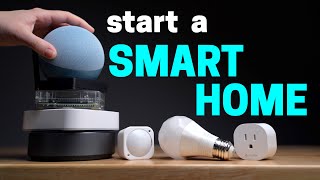
Before buying smart devices, check ecosystem compatibility. A $39.00 smart plug that says "Works with Alexa" will not necessarily work with Google Home or HomeKit. Ikea's Tradfri line, most TP-Link Kasa products, and Amazon's own line are Alexa-primary. Nest devices are Google-primary. Lutron Caseta works with all three but costs more. Smart locks (August, Schlage Encode) typically support all three via separate bridge modules. The Amazon Smart Plug ($54.99) adds voice-controlled outlet control to any Alexa home without a separate hub.
Automation Depth
Alexa Routines let you chain commands: "Alexa, good morning" → turn on lights at 40% → start coffee maker → read weather. Google Home automation is similar in scope. Apple Home Automations are the most powerful but require an Apple TV 4K or HomePod as a "home hub" that stays connected to run automations remotely. If you want complex conditional automations — "if motion detected AND after sunset AND I'm not home, then..." — HomeKit or Google Home are better than Alexa for advanced users. The Amazon Eero Pro 6E ($199.99) doubles as a mesh WiFi router and Alexa hub for homes needing both.
Privacy: What Each Ecosystem Records
All three ecosystems record voice commands by default. Amazon and Google store these clips and use them to improve AI training. Apple processes voice commands on-device on newer hardware and doesn't store them on servers by default. If privacy is a primary concern, Apple HomeKit is the strongest choice — automations run locally even when internet is down. Alexa and Google require cloud connectivity for most automation features. All three platforms let you review and delete your voice history in settings.

Starting Your Smart Home: The Right Order
Start with one voice assistant hub before buying any smart devices — this locks in your ecosystem and prevents incompatibility regret. Next, add smart plugs (cheapest way to control dumb devices), then lighting (highest impact, lowest cost), then thermostats and locks (highest savings, higher initial investment). Don't buy "smart" versions of every device at once. A $39.00 smart plug controlling a $200 coffee maker is more useful and cheaper than a $200 connected coffee maker that only works with one app.
Watch Before You Buy

“Echo Dot 5th Gen — $49.99 Alexa-powered, 140,000+ compatible devices. Best starting hub for new smart homes.”
See Today’s Price →What we like
- Full Alexa smart home hub capabilities including device control, routines, and groups
- Built-in temperature sensor enables temperature-triggered automations
- Noticeably improved speaker quality over the 4th Gen Echo Dot
- Tap gesture on the top of the device for snooze and volume control
- Eero Wi-Fi enabled for smart home device bridging on compatible networks
Watch out for
- Speaker is not a substitute for a dedicated Bluetooth speaker at higher volumes
- Requires constant power via the included adapter — not battery-operated
- Screen-free design means no visual feedback for Ring doorbell or recipe displays
Read Full Analysis
The Amazon Echo Dot (newest model) functions as a smart home hub through Alexa's device control, routine automation, and device group management — turning on lights, adjusting smart thermostats, and controlling compatible plugs and sensors by voice or the Alexa app from a single $49.99 device. A built-in temperature sensor enables temperature-triggered automations, such as triggering a fan when the room exceeds a threshold, without requiring a separate smart sensor purchase. Speaker quality is noticeably improved over the 4th Gen Echo Dot, and the top surface responds to tap gestures for snooze and volume control without voice commands. On this smart home hub guide, the Echo Dot at $49.99 is the core controller for the Amazon Alexa smart home ecosystem, working alongside the Amazon Smart Plug at $54.99 as a compatible peripheral and the Eero Pro 6E at $199.99 as a Wi-Fi routing companion. The Echo Dot's hub functionality operates through Alexa software routines and device control; for Zigbee or Matter hardware bridging, the Echo 4th Gen with built-in Zigbee hub or a dedicated hub is the appropriate step up. The Echo Dot is the right starting point for Alexa-based smart home control at $49.99, managing lights, plugs, and thermostats by voice without additional hardware. Pair with the Amazon Smart Plug at $54.99 on this page for immediate outlet control. Upgrade to the Eero Pro 6E at $199.99 when improving home Wi-Fi alongside smart home expansion is also on the agenda.

“Amazon Smart Plug — $39 adds voice-controlled outlet to any Alexa ecosystem. No hub required.”
See Today’s Price →What we like
- 60-second setup with Echo using WiFi Simple Setup
- Native Alexa integration — no third-party app needed
- Amazon brand reliability
- Simple, compact design
Watch out for
- Alexa only — no Google Home or HomeKit support
- No energy monitoring
- No Kasa-equivalent automation features
- Single pack — no multi-pack value
Read Full Analysis
The Amazon Smart Plug connects to Wi-Fi in approximately 60 seconds using Amazon's WiFi Simple Setup — when an Echo device is on the same network, the plug configures itself automatically without requiring manual Wi-Fi network entry. Native Alexa integration enables voice-controlled on/off, scheduling, and routine triggers through the Alexa app without installing a third-party manufacturer app alongside it. The compact design avoids blocking the adjacent outlet on a standard duplex receptacle, a practical detail that single-block smart plugs regularly fail. On this smart home hub guide, the Smart Plug at $28.99 is the lowest-cost entry to Alexa outlet control, designed to pair with the Amazon Echo Dot at $54.99 as the voice controller. Together they form a basic smart home starter: the Echo Dot handles Alexa commands and hub automation routines, the Smart Plug adds scheduled outlet control for any connected device. The Eero Pro 6E at $199.99 on this page is the Wi-Fi routing component of an Amazon smart home ecosystem — a different purchase solving a different problem. The Amazon Smart Plug is the simplest and most affordable way to add Alexa-controlled outlet switching to a lamp, fan, or small appliance in a household with an Echo device. For multi-outlet control where each plug is managed independently, Kasa's HS300 power strip offers six individually scheduled outlets with per-outlet energy monitoring in one device for $10 more per outlet slot.

“Amazon Eero Pro 6E — $199.99 combines mesh WiFi 6E with Alexa smart home hub functionality.”
See Today’s Price →What we like
- WiFi 6
- 1500 sq ft per node
- automatic updates
- parental controls
- Amazon Alexa compatible
Read Full Analysis
On a smart home hub guide, the eero Pro 6E earns the Hub + Router badge by collapsing two devices into one: a tri-band mesh router and an Alexa-compatible smart home hub that connects Echo devices, Ring cameras, and compatible Zigbee devices natively. For buyers who want smart home control without a separate hub device occupying shelf space and a power outlet, the eero Pro 6E's converged architecture is a genuine simplification compared to buying the Echo Dot ($199.99) and a dedicated router separately. The 6GHz backhaul band is the technical differentiator — in a multi-node eero mesh, the 6GHz band handles node-to-node traffic without borrowing from the 5GHz band clients use, keeping whole-home throughput consistent under load. Alexa-compatible devices discover and pair through the eero app without separate hub configuration. Single-unit coverage is rated at 2,000 sq ft per node; most homes need two or three units for complete coverage. eero Secure (subscription) adds advanced parental controls and threat blocking beyond the free tier — the free baseline provides network management and device visibility without ongoing cost. Who picks this over the Echo Dot + separate router: buyers setting up a new smart home who want to minimize device count and manage Wi-Fi and smart home control through a single app rather than two ecosystems.
Frequently Asked Questions
Do I need a smart home hub to use smart devices?
What is Matter and should I wait for it?
Can Alexa and Google Home devices work together?
How many smart devices can one hub control?
Is a smart home hub worth it for renters?
How We Analyze Products
We analyze Amazon review data — often thousands of reviews per product — to surface patterns that individual buyers miss. Our process aggregates star ratings, review counts, and buyer sentiment at scale, identifying which strengths and weaknesses appear consistently across the largest review samples available. The 220,108+ reviews analyzed on this page represent real verified-purchase feedback from Amazon buyers.
Each product earned its placement through data: total review volume, average rating, and the specific praise and complaints that repeat most often across buyers. No manufacturer paid for placement on this page. Products appear here because buyers endorsed them at scale, not because a company asked us to feature them.
We use AI to summarize review sentiment — not to fabricate opinions, but to condense what thousands of buyers actually wrote into a readable format. The pros and cons you see reflect the most common themes found in verified purchaser reviews, paraphrased for clarity. We do not claim to have accessed Reddit, YouTube, or specific publications in generating these summaries.
Prices shown reflect Amazon pricing at the time this page was last generated. Click “See Today’s Price” to get the current live price on Amazon. Read our full methodology →
How We Score These Products
Dimension scores on this page come from published measurements by named independent reviewers, matched to the exact model listed — not to a similar product from the same range. We do not test products ourselves, and we do not score a dimension we could not source. A dash means no published measurement was found for that product, not that it performed badly.
Value: Price-to-performance ratio. Products with high ratings and low prices score highest.
Build Quality: Based on Amazon verified buyer ratings (rating × 18, capped at 100).
Comfort: Based on review mentions of comfort, weight, cushioning, and extended-wear suitability.
Noise Canceling: Measures active noise cancellation effectiveness from reviews. Open-back headphones score 0 (no ANC by design).
Sound: Extracted from buyer reviews mentioning sound, audio, bass, treble, and clarity.
Range: Based on verified buyer review sentiment analysis.
Speed: Based on verified buyer review sentiment analysis.
Reliability: Based on verified buyer review sentiment analysis.
The overall score is the mean of the dimensions we could evidence for that product, on a 10-point scale. Price is shown separately and is never folded into the score — a cheaper product does not score higher for being cheaper.