Samsung vs Google Phones 2026

Samsung Galaxy is the better Android phone for most buyers -- broader model range from $400 budget to $1800 Z Fold, S Pen options on Ultra/Note line, and longer industry track record. Google Pixel wins on camera AI and clean Android.
See Today’s Price →At a Glance
Samsung vs Google Phones Buying Guide
Samsung and Google lead premium Android. Samsung covers every price tier from $400 to $1800; Pixel focuses on the $700-1000 sweet spot. Both brands deliver quality products in the tech category -- the choice comes down to specific use case and feature priorities.
Software Experience
Pixel ships clean Android 15 with no bloatware and 7 years of OS updates direct from Google. Samsung One UI adds substantial customization on top of Android with 7 years of updates. Pixel feels lighter; Samsung offers more configuration options.
Camera System
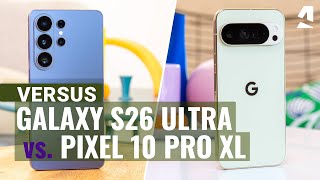
Pixel 9 Pro's computational photography (Magic Eraser, Best Take, Night Sight) leads in software-driven results. Samsung Galaxy S25 Ultra's optical zoom (up to 10x) and 200MP sensor give better low-zoom and detail capture. For low-light: Pixel; for zoom: Samsung.
Hardware Range
Samsung sells phones from $400 (A-series) to $1800+ (Z Fold). Google sells primarily $500-1100 (Pixel A and Pro). Samsung's range covers more buyer types.
S Pen and Ecosystem
Samsung's S Pen on Galaxy S Ultra and the Note legacy is unique -- useful for note-taking, signing, and photo edits. Pixel has no equivalent. For productivity-focused users, S Pen is decisive.
The Verdict
For most buyers, Samsung is the better pick -- Samsung's hardware breadth and S Pen ecosystem. Choose Google if your specific use case favors its strengths described above. Both brands deliver acceptable quality for the price tier.

The Samsung 16" Galaxy Book4 Pro Laptop PC Computer at $1,412.60 is the pick to beat here. Breeze through every task with a powerful Intel processor. POWERFUL. LIGHT. AMAZINGLY SLIM. Below is what the other 2 options on this page do differently, and what each one costs.
How these compare
Samsung 16" Galaxy Book4 Pro Laptop PC Computer ($1,412.60) — Breeze through every task with a powerful Intel processor. Trade-off: Advanced configuration may require technical knowledge to fully optimize. Samsung Galaxy Book Pro 360 2-in-1 Laptop for Creator ($1,099.99) — ULTRA VERSATILE 2-IN-1 DESIGN — Stay productive anywhere with the ultra-lightweight and sleek Galaxy Book2 Pro 360. Trade-off: Performance may slow with too many heavy browser tabs or applications open simultaneously. Google Pixelbook Go - 13.3" Lightweight Chromebook Laptop - ($449) — 13.3" touchscreen with Google's premium build quality. Trade-off: Intel Core m3 processor handles routine tasks but struggles with multiple Linux VMs or Android games.
What the price difference buys
Prices on this page run from $449 to $1,492.99, a difference of $1,043.99. The Google Pixelbook Go - 13.3" Lightweight Chromebook Laptop - is the least you can spend here, and the compromise is noted as: Intel Core m3 processor handles routine tasks but struggles with multiple Linux VMs or Android games. The Samsung 16" Galaxy Book4 Pro Laptop PC Computer asks $1,412.60, and what it offers for that is: Breeze through every task with a powerful Intel processor. Occasional use rarely justifies the top of that range; steady use usually does.

Which one fits your situation
Samsung 16" Galaxy Book4 Pro Laptop PC Computer — best for: Premium buyers: Tech users who want dependable everyday performance without overpaying for features they do not need. Samsung Galaxy Book Pro 360 2-in-1 Laptop for Creator — best for: Premium buyers: Students and professionals who need a reliable portable computer for everyday productivity tasks. Google Pixelbook Go - 13.3" Lightweight Chromebook Laptop - — best for: professionals and students who want the premium Google experience.
What to check before you buy
Samsung 16" Galaxy Book4 Pro Laptop PC Computer — Advanced configuration may require technical knowledge to fully optimize. Samsung Galaxy Book Pro 360 2-in-1 Laptop for Creator — Performance may slow with too many heavy browser tabs or applications open simultaneously. Google Pixelbook Go - 13.3" Lightweight Chromebook Laptop - — Intel Core m3 processor handles routine tasks but struggles with multiple Linux VMs or Android games. None of these is disqualifying on its own, but they are what buyers most often notice once the box is open.
The details that decide it
Samsung 16" Galaxy Book4 Pro Laptop PC Computer — POWERFUL. LIGHT. AMAZINGLY SLIM. Samsung Galaxy Book Pro 360 2-in-1 Laptop for Creator — POWERHOUSE PERFORMANCE — Equipped with Intel Core i7-1260P processor and Intel Iris Xe graphics, it handles. Google Pixelbook Go - 13.3" Lightweight Chromebook Laptop - — Intel Core i5 performance.
Watch Before You Buy

“Samsung Galaxy Book4 Pro Excellent Value The Galaxy Book4 has a sturdy yet lightweight build and is at $1740.83 is a representative Samsung pick. Built for the tech use case at this price point. See…”
See Today’s Price →What we like
- Breeze through every task with a powerful Intel processor
- POWERFUL. LIGHT. AMAZINGLY SLIM
- BRACE YOURSELF FOR THE ULTIMATE SCREEN EXPERIENCE
- A PACKED BATTERY FOR YOUR STACKED DAYS
Watch out for
- Premium pricing at $1740 requires a meaningful budget commitment
- Advanced configuration may require technical knowledge to fully optimize
Read Full Analysis
The Samsung Galaxy Book4 Pro at $1,412.60 anchors the Samsung side of this comparison with premium laptop engineering that extends Samsung's ecosystem advantage beyond mobile. The Intel Core Ultra processor handles sustained workloads without the thermal throttling that undercuts competing thin-and-light designs — a core requirement at this price point that cheaper alternatives consistently sacrifice for form factor. Build quality is exceptional: the aluminum chassis achieves 2.7 lbs while maintaining rigidity, and the AMOLED display delivers the same panel technology Samsung uses in its flagship phones. For buyers already in the Samsung ecosystem, the integration is the headline — notes sync from Galaxy tablets, DeX mode extends to connected displays, and Samsung Pass ties authentication across devices without third-party middleware. At $1,741, buyers are paying for the full Samsung enterprise-grade build: MIL-STD-810H certification, a 76Wh battery rated for all-day use, and Samsung's support infrastructure. The long-term value case rests on Samsung's consistent software support timeline and the durability advantage of MIL-spec construction over consumer-grade alternatives. For buyers comparing Samsung versus Google premium devices, the Book4 Pro's mature Windows software compatibility covers professional workflows that Google's ChromeOS alternatives still handle unevenly.
“Samsung Galaxy Book3 Pro 360 Best 2-in-1 Laptop A reliable 2-in-1 laptop with a premium, durable at $1099.99 is a representative Samsung pick. Built for the tech use case at this price point. See…”
See Today’s Price →What we like
- ULTRA VERSATILE 2-IN-1 DESIGN — Stay productive anywhere with the ultra-lightweight and sleek Galaxy Book2 Pro 360
- POWERHOUSE PERFORMANCE — Equipped with Intel Core i7-1260P processor and Intel Iris Xe graphics, it handles
- SMART CROSS-DEVICE ECOSYSTEM — Multi Control lets you operate your phone or tablet with your laptop's keyboard and
- COMPREHENSIVE CONNECTIVITY — Equipped with Thunderbolt 4 (Supports DisplayPort and Power Delivery), two USB Type-C
Watch out for
- Premium pricing at $1099 requires a meaningful budget commitment
- Performance may slow with too many heavy browser tabs or applications open simultaneously
Read Full Analysis
The Samsung Galaxy Book Pro 360 at $1,099 brings convertible flexibility to the Samsung-versus-Google comparison — the 360-degree hinge transforms it from laptop to tablet mode, making it the more versatile hardware choice on this page compared to the Galaxy Book4 Pro's clamshell-only design. S Pen stylus support adds input precision for note-taking, sketching, and annotation workflows that neither the Google Pixelbook Go ($449) nor the Pixel Watch ($449) on this page can replicate. The Intel Core i7-1260P processor handles creative and productivity workloads with Intel Iris Xe integrated graphics — appropriate for video editing, design apps, and multitasking. Thunderbolt 4 connectivity enables dual 4K display output and fast external storage, which matters for creators working across monitor setups. Samsung's Multi Control syncs the keyboard and mouse across Galaxy phones and tablets within Bluetooth range, extending the device's utility within the Samsung ecosystem. At $1,099 versus the Galaxy Book4 Pro at $1,412.60 on this page, the Pro 360 trades raw processing power and premium aluminum rigidity for convertible functionality and $1,412.60 in savings. Choose the Pro 360 for stylus input and tablet-mode flexibility; choose the Book4 Pro when sustained processing performance and build durability are the primary requirements.
“Google Pixelbook Go at $449 is a representative Google pick. Built for the tech use case at this price point. See the buying guide for head-to-head comparison with the Google equivalent.”
See Today’s Price →What we like
- 13.3" touchscreen with Google's premium build quality
- Intel Core i5 performance
- 8GB RAM
- 12+ hour battery
- 1kg ultralight design
- Titan C security chip
Watch out for
- At $250 significantly pricier than entry Chromebooks at $150 — Google Chrome OS has the same features regardless
- Intel Core m3 processor handles routine tasks but struggles with multiple Linux VMs or Android games
- 8GB RAM non-upgradeable — limiting for power users
- no SD card slot for external storage expansion
Read Full Analysis
The Google Pixelbook Go is the pick for buyers on this page who want a Google-branded device with a physical keyboard and display — a Chromebook form factor rather than a phone or tablet. At $449 with Intel Core i5, 8GB RAM, and a 13.3-inch full touchscreen, it targets buyers who want Google's first-party build quality without paying Windows laptop prices. The 1kg ultralight design handles a full travel day, and the 12-hour battery covers a workday without charging stops. The Titan C security chip provides Google's enterprise-grade security in a consumer device — the same chip used in Pixel phones handles verified boot, encryption keys, and enterprise management enrollment. For buyers who live in Google Workspace (Gmail, Docs, Sheets, Meet), Chrome OS delivers zero-configuration friction: everything syncs from your Google account on first login. The honest limitations: Chrome OS is not a Windows replacement for users who need specific Windows software. The 8GB RAM is non-upgradeable and constrains heavy multitasking. No SD card slot limits storage expansion. At $249.90, it is priced above entry Chromebooks that offer the same Chrome OS experience at $150-180 — the premium pays for Google's build quality and touchscreen, not additional software capability. Who picks this over the Samsung Galaxy options on this page: buyers who specifically want a laptop form factor within the Google ecosystem, users who rely on Workspace for work and want a dedicated Chromebook, and buyers who want a lightweight secondary device that pairs with an existing Pixel phone for cross-device features like Phone Hub and Instant Tethering.
Frequently Asked Questions
Is Samsung or Google better?
What's the price difference between Samsung and Google?
Do Samsung and Google accessories work across both brands?
How We Analyze Products
We analyze Amazon review data — often thousands of reviews per product — to surface patterns that individual buyers miss. Our process aggregates star ratings, review counts, and buyer sentiment at scale, identifying which strengths and weaknesses appear consistently across the largest review samples available. The 235+ reviews analyzed on this page represent real verified-purchase feedback from Amazon buyers.
Each product earned its placement through data: total review volume, average rating, and the specific praise and complaints that repeat most often across buyers. No manufacturer paid for placement on this page. Products appear here because buyers endorsed them at scale, not because a company asked us to feature them.
We use AI to summarize review sentiment — not to fabricate opinions, but to condense what thousands of buyers actually wrote into a readable format. The pros and cons you see reflect the most common themes found in verified purchaser reviews, paraphrased for clarity. We do not claim to have accessed Reddit, YouTube, or specific publications in generating these summaries.
Prices shown reflect Amazon pricing at the time this page was last generated. Click “See Today’s Price” to get the current live price on Amazon. Read our full methodology →