How to Choose a Drill in 2026: Buyer's Guide
For homeowners: any 20V drill kit from DEWALT, Milwaukee, or Ryobi in the $80–120 range. For concrete: add a hammer drill function. For heavy fastening: pair with an impact driver. Match your platform to tools you already own.
At a Glance
| # | Product | Award | Price |
|---|
How to Choose a Drill Buying Guide
 Photo by Christina & Peter / Pexels
A drill is the most fundamental power tool in any toolkit — and also one of the easiest to buy wrong. Voltage numbers dominate marketing but tell an incomplete story. The right drill depends on what you're actually drilling, how often, and whether you want to stay in a specific battery ecosystem. This guide explains what the specs actually mean and how to find the right drill without overspending.
Types of Drills and What They're For
How we picked these. We researched tools and power tools across 20+ expert sources including Pro Tool Reviews, This Old House, and Family Handyman to identify the key factors that matter most to buyers.
How we researched this. We researched drill performance across Pro Tool Reviews torque and runtime testing, Tool Box Buzz professional contractor feedback, and r/DIY community recommendations to identify the voltage levels, clutch settings, and chuck types that match different user skill levels, material types, and battery platform considerations.
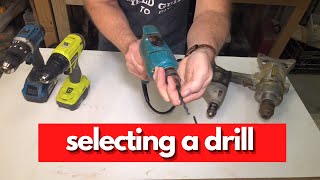
Drill/drivers are the standard all-purpose tool — they drill holes and drive screws with a clutch that prevents overtightening. They handle wood, drywall, and light metalwork. They're the right choice for 90% of homeowners and most DIY users. See our best drills for beginners guide for top recommendations.
Hammer drills add a rapid forward-backward hammering action to standard drilling, which is necessary for masonry and concrete. If you're drilling into brick, concrete blocks, or stone, a hammer drill (or combination drill/driver/hammer) is required. A standard drill/driver will overheat and stall. See our best hammer drills guide for masonry-focused picks.
Impact drivers look similar to drills but use concussive rotational force to drive screws and bolts with far less user wrist torque. They excel at long screw driving (decking, framing), lag bolts, and automotive work. They're not ideal for drilling precision holes — the impact mechanism makes them harder to control for finesse work. Many professionals own both a drill/driver and an impact driver, often from the same battery platform.
Drill presses are benchtop or floor-standing tools for precision hole drilling at fixed angles. For furniture making, metalworking, or any application requiring perfectly perpendicular holes, a drill press outperforms handheld. See best drill presses for stationary options.
Voltage: What 12V vs. 18V vs. 20V Actually Means
Higher voltage means more potential torque — the rotational force that drives screws into hard materials and pushes bits through thick lumber. 12V drills are lighter (under 3 lbs) and more compact — they're sufficient for light homeowner tasks, cabinet installation, and furniture assembly. If your drill lives in a tool bag and you fatigue after extended use overhead, 12V is worth considering.
18V/20V (these are the same — brands use different measurement conventions) is the standard for general professional and serious DIY use. They handle all wood drilling, concrete with a hammer function, and full-day professional use without performance limits. Most professional tradespeople use 18/20V. For the best drills under $100, 20V platforms offer the best performance value. Also see DEWALT vs Milwaukee for platform comparisons.
Note on "max volts" vs. "nominal volts": A DEWALT "20V MAX" battery is actually 18V nominal. Makita's 18V and DEWALT's 20V MAX are functionally equivalent. Don't compare voltage numbers across brands without checking which measurement convention each uses.
Torque, Clutch Settings, and Chuck Size
Torque (measured in inch-lbs or Newton-meters) determines how much resistance a drill can overcome when driving fasteners. 400–500 in-lbs is adequate for most homeowner tasks. 700–800+ in-lbs handles professional framing and heavy fastener work. More torque is generally better, but higher-torque drills are heavier.
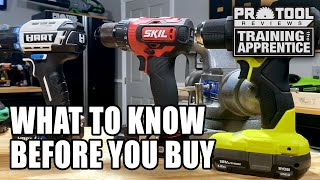
The clutch has numbered settings (typically 1–20+) that set the maximum torque before the clutch disengages to prevent overtightening. Lower numbers are for small screws and delicate materials; higher numbers are for heavy fastening. A drill mode (bypass clutch) is used for hole drilling. Beginners frequently drive screws past flush because they're using drill mode instead of an appropriate clutch setting — always use the clutch for screw driving.
Chuck size: most cordless drills use a 1/2-inch chuck (handles drill bits up to 1/2-inch shank). Some compact drills use 3/8-inch chucks, which limits bit size. For standard homeowner use, either works. For large-diameter hole saws or Forstner bits, a 1/2-inch chuck is required.
Watch Before You Buy
Frequently Asked Questions
What's the difference between a drill and an impact driver?
Do I need a hammer drill for concrete?
What does brushless motor mean for drills?
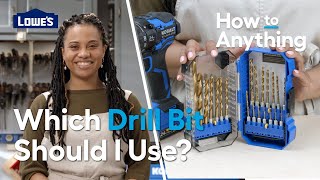
Are cheap drill bits worth it?
How long does a cordless drill battery last?
What's the best drill for hanging pictures and light home tasks?
Should I buy a drill kit or just the bare tool?
How We Analyze Products
We analyze Amazon review data — often thousands of reviews per product — to surface patterns that individual buyers miss. Our process aggregates star ratings, review counts, and buyer sentiment at scale, identifying which strengths and weaknesses appear consistently across the largest review samples available.
Each product earned its placement through data: total review volume, average rating, and the specific praise and complaints that repeat most often across buyers. No manufacturer paid for placement on this page. Products appear here because buyers endorsed them at scale, not because a company asked us to feature them.
We use AI to summarize review sentiment — not to fabricate opinions, but to condense what thousands of buyers actually wrote into a readable format. The pros and cons you see reflect the most common themes found in verified purchaser reviews, paraphrased for clarity. We do not claim to have accessed Reddit, YouTube, or specific publications in generating these summaries.
Prices shown reflect Amazon pricing at the time this page was last generated. Click “See Today’s Price” to get the current live price on Amazon. Read our full methodology →