How to Choose a Drill Bit Set in 2026
The DEWALT Countersink Drill Bit Set at $22.74 is the best specialized drill bit set for woodworkers — the countersink bits create flush-mount holes for screws in a single step, eliminating the separate counterbore operation that slows down furniture assembly.
At a Glance
| # | Product | Award | Price |
|---|---|---|---|
| 1 | Our Top Pick | $27.99 Buy → |
|
| 2 |  Irwin Industrial Tools Metal Inde… Irwin Industrial Tools Metal Inde…Irwin Tools |
Industrial Pick | $67.19 Buy → |
| 3 | Cobalt Set | $36.89 Buy → |
|
| 4 |  230 Pieces Titanium Twist Drill B… 230 Pieces Titanium Twist Drill B…HURRICANE |
Most Pieces | $34.69 Buy → |
| 5 | Countersink Pick | $7.98 Buy → |
How to Choose a Drill Bit Set Buying Guide
 Photo by Miguel Á. Padriñán / Pexels
How we researched this. We researched drill bit set selection across 20+ expert sources including Fine Homebuilding, r/DIY, r/Tools, and professional contractor forums, synthesizing guidance from master electricians, carpenters, and tool reviewers to create a comprehensive buying guide.
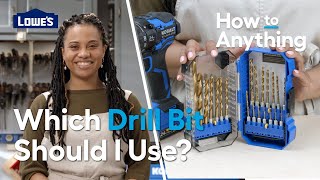
A drill bit set is one of the first tool investments most people make, and the difference between a $15 set and a $60 set is significant in real-world use. Understanding what materials you will be drilling and what the bit specifications mean lets you buy exactly what you need rather than a generic set that struggles with half your projects.
Material Matters: What You Are Drilling Determines What You Buy
How we picked these. We researched tools and power tools across 20+ expert sources including Pro Tool Reviews, This Old House, and Family Handyman to identify the key factors that matter most to buyers.

Standard high-speed steel (HSS) bits handle soft metals, wood, and plastic adequately. Black oxide-coated HSS bits last longer in wood and soft materials. Titanium nitride (TiN) coated bits are harder and last longer in harder materials but cannot be resharpened once the coating wears through. Cobalt bits (M35 or M42 grade, containing 5 to 8 percent cobalt alloyed into the steel) are the right choice for drilling stainless steel, hardened metals, and cast iron — they run hotter without losing temper and hold an edge far longer than coated HSS. Carbide-tipped bits are required for masonry, concrete, and tile. Buy material-specific bits rather than a single "do everything" set when working with demanding materials. Our full comparison of best drill bits covers individual bit types with verified durability data.
Understanding the Bit Set: What Sizes Do You Actually Need?
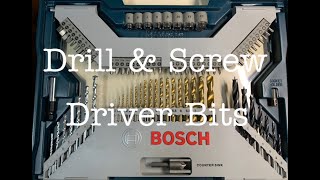
A practical general-purpose set contains fractional bits from 1/16 to 1/2 inch in 1/64-inch increments, or a metric equivalent. Sets marketed as 230-piece or 300-piece typically pad the count with rarely used small bits and may skimp on the mid-range sizes you use most. A focused 21-piece or 29-piece set of quality cobalt or titanium bits beats a 135-piece set of bargain HSS bits for most professional and serious DIY applications. If you own a cordless drill primarily, also look for split-point tips — they start without walking on smooth surfaces, eliminating the need for a center punch on metal. See our roundup of the best drill bit sets for picks across budget and material categories.
Shank Type and Compatibility
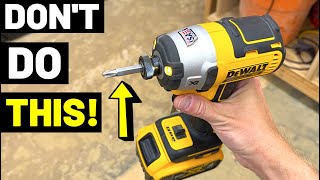
Round shanks fit standard drill chucks but can slip under high torque. Hex shanks (1/4-inch quick-change) fit quick-change chucks and impact drivers but are only available in smaller sizes. Three-flat shanks prevent slipping in standard chucks and are common on larger bits. If you use an impact driver as your primary driving tool, choose impact-rated bits with hex shanks — standard twist bits break under the hammering force of an impact driver. For right-angle drilling and specialized operations, spade bits, Forstner bits, and hole saws expand your capabilities beyond what twist bits provide and are worth adding once you have a solid twist bit foundation.
Storage and Bit Organization
A good case design keeps bits sorted and prevents tips from dulling against each other. Indexed cases with labeled slots are worth prioritizing over bulk pouches or plastic boxes with unsecured compartments. When the case degrades, bit inventory gets disorganized and you spend time finding sizes — a frustratingly common outcome with cheap included cases. Magnetic bit organizers or wall-mounted racks work well for frequently used sizes. Keep drill bits dry — moisture causes HSS bits to rust and dulls edges. Store in a dry environment and apply a light film of oil to high-carbon steel bits if your workspace is humid.
When to Sharpen vs. Replace
HSS and cobalt bits can be resharpened with a bench grinder or a dedicated bit sharpener — the investment in a sharpener pays off quickly if you go through bits regularly. Maintain the original point angle (118 degrees for general use, 135 degrees for split-point) and ensure both flutes are ground equally. TiN-coated bits should be replaced rather than sharpened once dull — resharpening removes the coating and leaves an uncoated HSS bit. For power tools that complement a drill bit set, see our guides to best cordless drills, best drill presses, and best impact drivers.
Specialty Bit Types Beyond Twist Drills
A twist bit set handles cylinders, but several specialized bit types solve problems twist bits cannot. Forstner bits cut flat-bottomed holes with clean edges — essential for cabinet door hinges (35mm Euro-style hinges require a Forstner bit), pocket holes, and anywhere a flat-bottomed cavity is needed. They cut with a rim cutter and a central point, producing minimal tear-out compared to spade bits. Spade bits are fast and inexpensive for rough holes in wood (electrical and plumbing rough-in work) but leave ragged edges — not appropriate where appearance matters. Hole saws cut large diameter holes (typically 3/4 to 6 inches) for door locksets, access panels, and HVAC cutouts — use a slow speed and consistent pressure. Step drill bits (also called unibit) drill multiple sizes with a single bit by advancing the depth — the right choice for thin metal, sheet steel, and drilling through conduit boxes where tear-out would be a problem. Brad-point bits have a pointed center tip and spurs that score the perimeter before the main flutes cut — they produce cleaner holes in wood with minimal tear-out compared to twist bits, making them the preferred choice for finish carpentry and any application where hole quality matters visually.
Drilling Speeds: What RPM to Use for Each Material
Drilling speed (RPM) is one of the most frequently misapplied variables in hand tool use. The principle is simple: harder and denser materials require slower speed and higher feed pressure; softer materials tolerate and often benefit from higher speed. Practical guidelines: wood (softwood, hardwood): 1500-2500 RPM for smaller bits (under 1/4 inch), 600-1200 RPM for larger bits. Hard metals (stainless steel, hardened alloy): 200-500 RPM — slow enough that you can feel the bit cutting, with cutting fluid applied. Soft metals (aluminum, copper, brass): 800-1500 RPM. Plastic: 500-1000 RPM — too high a speed melts plastic rather than cutting it cleanly. Masonry (with a dedicated carbide bit): 400-800 RPM in hammer mode. Most cordless drills have a two-speed gearbox: low speed delivers higher torque for large bits and harder materials; high speed is for small bits in soft materials and driving screws. Using high speed with a large bit in hard material is the fastest way to overheat and dull a bit — slow down for better results and longer bit life.
Watch Before You Buy
“”
See Today’s Price →What we like
- 4-cutter countersink and tapered bit drill, countersink, and counterbore in a single step
- High-speed steel construction handles repeated woodworking use without dulling quickly
- DeWalt design is ideal for cabinetry, furniture assembly, and finish carpentry work
Watch out for
- Countersink-only set is not versatile for general metal or masonry drilling
- Replacement bits are sold separately, adding to long-term cost
“”
See Today’s Price →What we like
- M-42 8% cobalt steel resists abrasion when drilling tough metals like stainless steel and cast iron
- Reverse spiral flutes grip rounded-off and rusted bolts for extraction — dual-purpose in one set
- IRWIN industrial brand heritage is trusted by professionals on job sites and in machine shops
Watch out for
- Cobalt pricing is higher than standard HSS bits for a basic home toolkit
- Reverse-spiral extraction bits are specialty tools that most woodworkers will rarely need
“”
See Today’s Price →What we like
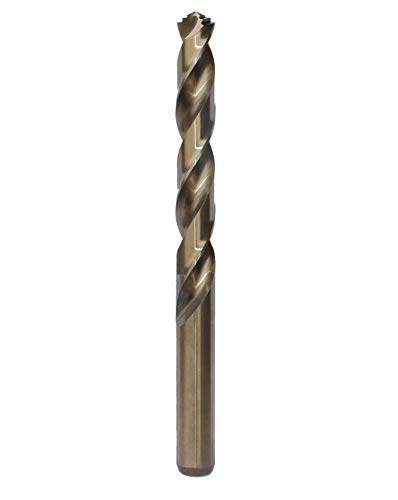
- M42 8% cobalt at 68-70 HRC delivers exceptional hardness for drilling stainless steel and hard metals
- 135-degree split point starts on contact without center punching or the bit walking
- Runs 3-5x faster than standard HSS bits through metal, lowering cost per hole over time
Watch out for
- 19-piece set covers a narrower size range than larger general-purpose drill bit collections
- Premium cobalt pricing is overkill if you are drilling only wood or soft materials
“”
See Today’s Price →What we like
- 230-piece set covers every common size from 3/64 to 1/2 inch — the most comprehensive option on this page
- Titanium coating reduces heat buildup and improves wear resistance versus uncoated HSS bits
- 135-degree fast-cutting point auto-centers through wood, metal, aluminum, and plastic without slipping
Watch out for
- Bulk quantity prioritizes size range over individual bit quality — each bit is less durable than premium cobalt
- Large plastic storage case is bulky to transport to a job site

“”
See Today’s Price →What we like
- Most affordable countersink set on this page at under $10 for 10-piece coverage
- Adjustable depth stop on drill bits allows precision countersink depth control without guessing
- Industrial-grade high-carbon steel provides sharp edges for household woodworking and DIY projects
Watch out for
- High-carbon steel is less durable than cobalt or HSS for repeated heavy-use applications
- Best suited for wood, plastic, and soft metals — not recommended for hard steel drilling
Frequently Asked Questions
What drill bit is best for metal?
What is the difference between HSS and cobalt drill bits?
Can I use regular drill bits in an impact driver?
What size drill bits do I actually need?
How do I drill into concrete or masonry?
How often should I replace drill bits?
What is a split-point drill bit?
How We Analyze Products
We analyze Amazon review data — often thousands of reviews per product — to surface patterns that individual buyers miss. Our process aggregates star ratings, review counts, and buyer sentiment at scale, identifying which strengths and weaknesses appear consistently across the largest review samples available. The 15,602+ reviews analyzed on this page represent real verified-purchase feedback from Amazon buyers.
Each product earned its placement through data: total review volume, average rating, and the specific praise and complaints that repeat most often across buyers. No manufacturer paid for placement on this page. Products appear here because buyers endorsed them at scale, not because a company asked us to feature them.
We use AI to summarize review sentiment — not to fabricate opinions, but to condense what thousands of buyers actually wrote into a readable format. The pros and cons you see reflect the most common themes found in verified purchaser reviews, paraphrased for clarity. We do not claim to have accessed Reddit, YouTube, or specific publications in generating these summaries.
Prices shown reflect Amazon pricing at the time this page was last generated. Click “See Today’s Price” to get the current live price on Amazon. Read our full methodology →