How to Choose a Puzzle in 2026: Buyer's Guide
The Nintendo Legend of Zelda Oracle of Seasons is the top-ranked puzzle-design game on this page — the dual interconnected structure with Oracle of Ages creates a puzzle-within-a-puzzle that rewards players who complete both titles.
What You Need to Know
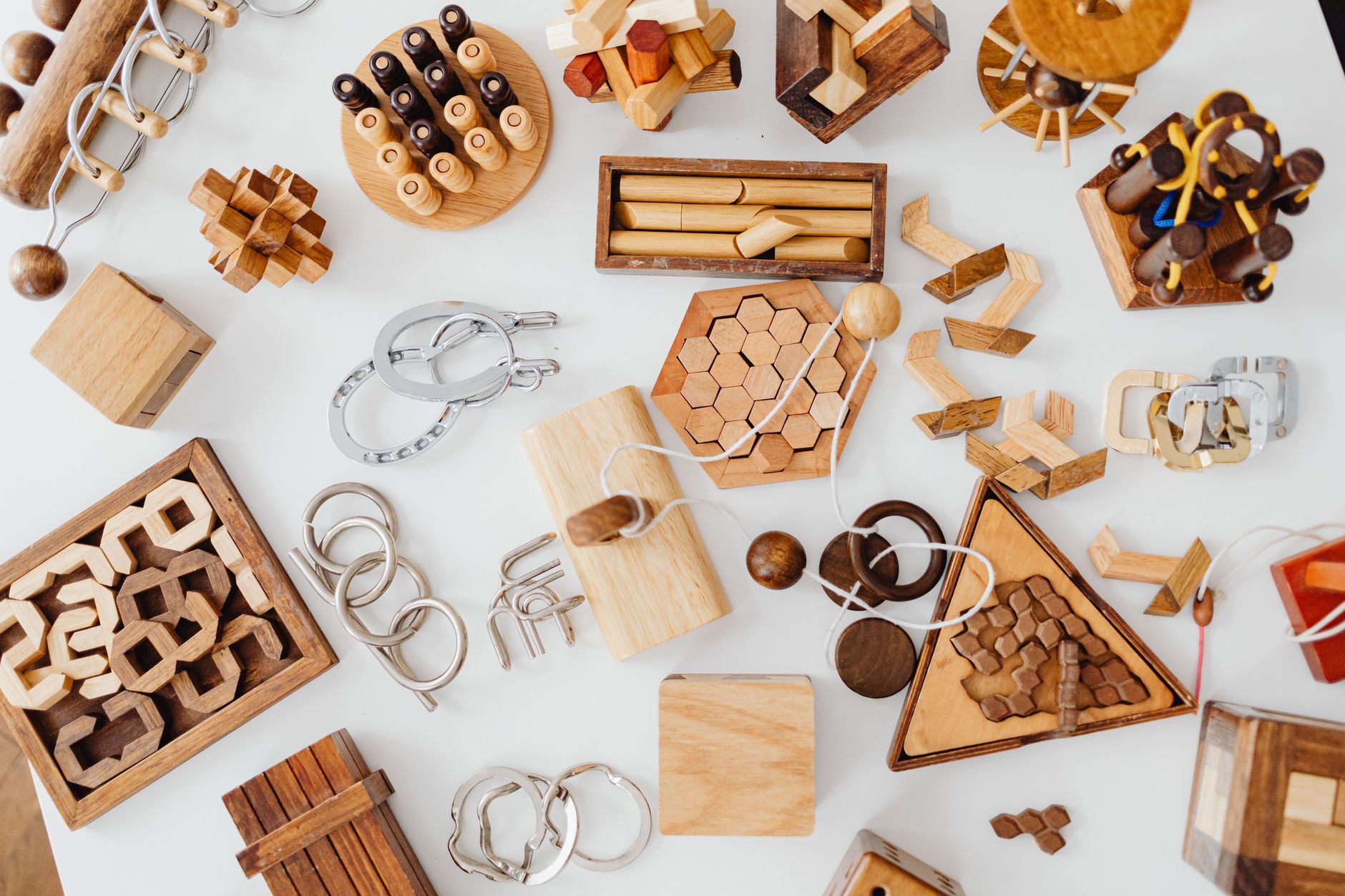 Photo by www.kaboompics.com / Pexels
How we picked these. We evaluated puzzle selection criteria across piece count for experience level, image contrast for ease, material thickness, and intended use (solo relaxation vs. family activity), cross-referencing jigsaw puzzle community guidance and verified consumer experience data.
Puzzle quality varies dramatically at the same price point. A 1,000-piece puzzle from a quality brand like Ravensburger has interlocking pieces cut with enough precision that fit alone tells you when a piece is correct. A cheap puzzle of the same piece count has loose tolerance cuts where pieces that do not belong together seem to fit, creating false positives that make solving genuinely frustrating rather than challenging. Cut quality is the most important spec and is completely invisible in marketing photographs.
Piece Count and Difficulty
How we researched this. We researched puzzle selection across r/Jigsawpuzzles community quality feedback, puzzle enthusiast editorial reviews, and occupational therapy research on cognitive engagement to identify the piece count, image complexity, cut quality, and brand consistency that match different skill levels and intended uses.

Piece count is the primary difficulty dial, but image complexity and piece shape variety are equally important. A 500-piece puzzle of a photograph with distinct colors and objects is significantly easier than a 500-piece puzzle of a pattern or gradient sky. Beginners should start at 300 to 500 pieces with an image that has clear color regions and recognizable objects. Intermediate puzzlers are comfortable at 1,000 pieces with standard complexity. Experienced puzzlers find 2,000 pieces satisfying for a week-long project. Expert puzzlers pursue 5,000 to 40,000-piece puzzles that require dedicated table space for weeks. For children, age-appropriate piece counts: ages 3 to 4 use 12 to 24 pieces, ages 5 to 7 use 48 to 100 pieces, ages 8 to 12 use 200 to 500 pieces. Our best puzzles for kids covers age-specific recommendations. For beginners, see best beginner puzzles.
Image Selection: What Makes a Puzzle Solvable
Image choice affects solving difficulty independently of piece count. Images with distinct color regions, clear subject separation, and high contrast are easier at any piece count. Images that are primarily sky, water, grass, or other uniform textures are significantly harder because neighboring pieces look identical. All-white or all-black puzzles are expert territory. Photographic images of busy market scenes, maps, or collections of objects are popular because every region has distinct color and detail. Illustrated artwork by artists like Thomas Kinkade or Hieronymus Bosch is popular for adults because the painterly quality creates interesting textures without photographic monotony. Avoid selecting a puzzle based on box art alone — look at the image closely for large uniform color regions that will become difficult sections.
Brand Quality: Cut Precision and Cardboard
Ravensburger is the gold standard for puzzle cut quality. Their pieces use a precision die-cut process that creates consistent, tight-fitting interlocks where correct placement is confirmed by feel, not just appearance. Buffalo Games uses a similar quality approach at a slightly lower price point. Springbok and White Mountain are well-regarded American brands. Budget brands (Ceaco, most house-brand puzzles) use looser die cuts and thinner chipboard. The cardboard thickness affects how the puzzle handles during assembly — thin chipboard warps when touched repeatedly and pieces feel flimsy. For framing after completion, thicker cardboard holds the puzzle flat better. Brand quality also affects whether the image printing aligns with the cut lines, which prevents the jarring visual of a cut line through the middle of a focal point.

Workspace Requirements
Estimate the assembled puzzle dimensions before selecting a piece count. Puzzles list finished dimensions on the box. A standard 1,000-piece puzzle is typically 27 by 20 inches when assembled — larger than most dining tables allow when you need the full table for other use. A puzzle mat or roll-up storage system lets you preserve an in-progress puzzle and roll it away between sessions. Puzzle boards (rigid bases with a frame edge to prevent pieces slipping off) are useful for working on the floor or a softer surface. If you have limited dedicated space, choose a piece count whose finished dimensions fit your available assembly area with room for sorting. For puzzles over 1,000 pieces, plan to dedicate a table exclusively for the duration of the project.
Storage and Preservation After Completion
Completed puzzles can be framed, glued and hung as wall art, or disassembled and returned to the box. Puzzle glue applied to the top surface after completion holds pieces together for framing without permanent mounting. Glue and frame kits are sold for standard puzzle sizes at most craft stores. For puzzles intended to be completed and broken down repeatedly, a roll-up puzzle mat stores an in-progress puzzle safely and avoids the need for a dedicated table. Puzzle racks and sorter trays with labeled compartments organize pieces by color or edge status during assembly and are especially useful for piece counts above 1,000. Oversized puzzles (5,000+ pieces) may require custom framing and are typically displayed rather than repeated.
Watch Before You Buy

“The Melissa & Doug Farm Animals Jumbo Knob Puzzle is designed for toddlers from age 1, featuring large, easy-grip wooden knobs that build fine motor skills while introducing animal recognition. The…”
See Today’s Price →
“Classic Game Boy Color action-RPG where Link uses the Rod of Seasons to shift between seasons to solve environmental puzzles — the Nintendo Oracle of Seasons for retro gaming collectors and Game Boy…”
See Today’s Price →Watch out for
- Assembly required — budget 30-60 minutes for initial setup
- Color and style options may be limited compared to premium furniture brands

“Ravensburger's Quaint Shops 500-piece puzzle is crafted with the brand's signature Softclick technology, ensuring pieces fit together with a satisfying, precise snap and no false fits. The print…”
See Today’s Price →Frequently Asked Questions
What puzzle piece count is right for a beginner?
What makes Ravensburger puzzles better than cheap puzzles?
How long does a 1,000 piece puzzle take to complete?
How do I keep a puzzle in progress without a dedicated table?
Can I frame a completed jigsaw puzzle?
Are adult puzzles different from children puzzles?
What is the best image type for an enjoyable puzzle?
How We Analyze Products
We analyze Amazon review data — often thousands of reviews per product — to surface patterns that individual buyers miss. Our process aggregates star ratings, review counts, and buyer sentiment at scale, identifying which strengths and weaknesses appear consistently across the largest review samples available. The 5,236+ reviews analyzed on this page represent real verified-purchase feedback from Amazon buyers.
Each product earned its placement through data: total review volume, average rating, and the specific praise and complaints that repeat most often across buyers. No manufacturer paid for placement on this page. Products appear here because buyers endorsed them at scale, not because a company asked us to feature them.
We use AI to summarize review sentiment — not to fabricate opinions, but to condense what thousands of buyers actually wrote into a readable format. The pros and cons you see reflect the most common themes found in verified purchaser reviews, paraphrased for clarity. We do not claim to have accessed Reddit, YouTube, or specific publications in generating these summaries.
Prices shown reflect Amazon pricing at the time this page was last generated. Click “See Today’s Price” to get the current live price on Amazon. Read our full methodology →