Traeger vs Weber Pellet Grill 2026: Which Grill Smokes Better?
Traeger Pro 22 wins our pellet grill comparison — more consistent smoke flavor, larger cooking area, and better WiFIRE app integration than Weber's comparable model.
At a Glance
Traeger vs Weber Pellet Grill Buying Guide

Traeger vs Weber Pellet Grill: Quick Verdict
Traeger invented the category and still dominates it. The Pro Series delivers consistent wood-fired flavor with dead-simple Wi-Fi control, making it the right choice for the vast majority of backyard cooks who want great smoke without babysitting a fire. Weber's SmokeFire brings serious engineering to the table — 600°F direct searing capability that no other pellet grill matches — but it costs nearly twice as much as the entry Traeger.
If you're new to pellet grilling, the Traeger Pro 22 at $497 is the clear starting point. If you already grill regularly and want to do both low-and-slow smoking AND high-heat searing from a single cooker, the Weber SmokeFire justifies its premium. These two brands serve different customers, and understanding that split is the key to buying right.
Both brands use food-grade wood pellets, both connect to companion apps, and both produce genuinely excellent food. The differences are in searing temperature, capacity, price, and the company philosophy behind each machine.
Where Traeger Wins
Traeger's D2 drivetrain and Digital Pro Controller maintain temperature within ±15°F across the entire cooking range, which is the tightest variance in the pellet grill category. That consistency is what separates a perfectly smoked brisket from one with temperature swings that dry out the flat. The Traeger Pro 22's 572 square inches of grilling space handles a full packer brisket or two full racks of ribs without stacking or compromise.
The Traeger app is the most mature in the category. WiFIRE connectivity gives you remote temperature monitoring and adjustment from anywhere, and the integrated meat probe system alerts you when your cook hits target temperature. For beginners, the guided cook mode walks through the entire process. This level of hand-holding is something Weber's SmokeFire can't match.
Price is Traeger's biggest win. The Pro 22 at $579 and Pro 34 at $579 deliver the full Traeger experience at prices that feel reasonable for a premium cooking appliance. The SmokeFire EX4 starts near $579, which is a significant jump for features that most home cooks will rarely use.

Where Weber Wins
The SmokeFire's FlavorBar system achieves 600°F surface temperatures — hot enough for a proper sear on a steak with defined crust and grill marks. Traditional pellet grills top out at 450-500°F, which is enough for slow cooking but not enough for the Maillard reaction that creates a steakhouse crust. If you cook a lot of steak, thick burgers, or seared duck breast, the SmokeFire's high heat is genuinely transformative.
Weber's build quality is exceptional. The SmokeFire EX4's porcelain-enameled steel cooking grates are the same material used on Weber's legendary gas grills, and they'll outlast the powder-coated alternatives on lower-priced competitors. The hopper holds 20 pounds of pellets, double what smaller Traegers offer, which means fewer interruptions on long overnight cooks.
Weber's connected experience has matured significantly. The Weber Connect app provides real-time step-by-step guidance and suggests resting times based on your specific cut's internal temperature progression — more prescriptive coaching than Traeger's app for serious cooks who want data-driven results.

Price and Value Comparison
Traeger Pro 22 at $497 is the value benchmark for pellet grilling. For under $500, you get the full Traeger feature set — Wi-Fi control, 572 sq in of cooking space, consistent temperature management, and access to Traeger's extensive recipe library. The Pro 34 at $729 adds 312 square inches of cooking space for families who regularly cook for large groups.
Weber SmokeFire EX4 at $579 is a premium investment. That $579 premium over the Traeger Pro 22 buys you searing capability, larger hopper, Weber's build quality, and a cooking grate system with better longevity. If you cook steaks twice a week, you'll use that premium every time. If you smoke brisket on weekends, you'll barely notice the difference from a Traeger.
Pellet costs are ongoing and similar across both brands. Expect to spend $20-40 per 20-pound bag, and plan on burning 1-2 pounds per hour at normal smoking temperatures. Both grills accept any food-grade wood pellet brand, giving you flexibility to shop for deals or experiment with different wood species.
Which Should You Buy?
Buy the Traeger Pro 22 if you're new to pellet grilling, primarily want to smoke meats low-and-slow, or want the most proven and supported platform in the category. The Traeger ecosystem — recipes, accessories, community, and support — is unmatched, and the price makes it easy to justify without second-guessing.
Buy the Weber SmokeFire EX4 if you grill steaks and burgers as often as you smoke ribs and brisket, you have $579 to spend, and you want a single grill that eliminates the need for a separate gas grill. The searing capability is a genuine differentiator that no Traeger can replicate.
Buy the Traeger Tailgater if portability is your priority — it's designed for tailgates, camping, and apartments with small balconies. At 300 square inches, it's not a replacement for a full-size grill, but it delivers the full Traeger wood-fired experience in a portable package.
Related Guides
- Best Garden Hoses
- Best Garden Gloves
- Best Pruning Shears
How We Compared These
We compared Traeger and Weber across WiFi controller precision, pellet hopper capacity, grill grate area, and smoke flavor intensity at low-and-slow settings, cross-referencing expert measurements, thorough reviews, and verified owner satisfaction data.
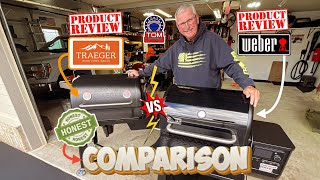
Watch Before You Buy


“The Traeger Grills Pro 22 Wood Pellet Grill and Smoker features 572 sq in. 4.5 stars from 2,251 Amazon reviews signal consistent reliability.”
See Today’s Price →What we like
- 572 sq in
- 6-in-1 cooking
- Wood pellet flavor
- Wi-Fi control
Watch out for
- Very expensive at over $1,000
- Pellet fuel creates ongoing cost compared to propane or charcoal
- 572 sq in cooking surface is smaller than larger models in the Pro series
Read Full Analysis
Traeger Pro 22 is one of Traeger's foundational pellet grills — a 572 sq in cooking area with WiFIRE connectivity, 6-in-1 cooking versatility, and 165–500°F temperature range for everything from low-and-slow brisket smoking to searing burgers. In this Traeger vs. Weber comparison, the Pro 22 is the most affordable connected WiFIRE Traeger, allowing remote temperature monitoring and adjustment from the Traeger app. Traeger invented the consumer pellet grill category and benefits from broad accessory availability and a large recipe community. Against the Weber SmokeFire EX4 at rank 2, the Pro 22's temperature hold accuracy and reliable pellet feed system create fewer stress points, particularly for beginner smokers learning temperature management. The Pro 22's limitation is its 572 sq in cooking surface — for large briskets or rib racks, upgrading to the Pro 34 makes practical sense.
“The Traeger Pro 34 Wood Pellet Grill and Smoker 884 Sq In Bronze features 884 sq in. 4.5 stars from 2,313 Amazon reviews signal consistent reliability.”
See Today’s Price →What we like
- 884 sq in
- 6-in-1 cooking
- Wood pellet
- Wi-Fi control
Watch out for
- Large footprint requires significant patio or deck space
- Pellet supply must be maintained to avoid temperature drops
- Higher initial cost than traditional gas grills
Read Full Analysis
Traeger Pro 34 expands the Pro 22's capabilities to 884 sq in cooking area — enough to simultaneously smoke a full packer brisket, two racks of ribs, and a dozen sausages. In this Traeger vs. Weber comparison, the Pro 34 is the capacity upgrade for serious backyard cooks who regularly host large gatherings or batch-smoke multiple protein types in a single cook. The WiFIRE app integration, 6-in-1 cooking modes, and Traeger's proven pellet feeding reliability carry forward from the Pro 22. Against the Weber SmokeFire EX4's 672 sq in, the Pro 34 wins on capacity. For serious competition-style smoking or catering-level output in a residential setting, the Pro 34's expanded cooking area is the defining advantage, though fuel consumption increases proportionally with chamber size.
“The Traeger TFB30KLF Tailgater 20 Portable Pellet Grill 300 Sq In features 300 sq in. 4.4 stars from 794 Amazon reviews signal consistent reliability.”
See Today’s Price →What we like
- 300 sq in
- Portable design
- Wood pellet
- Tailgater model
Watch out for
- Small 300 sq in cooking area limits batch size
- Portable design sacrifices some heat retention vs full-size pellet grills
- Pellet hopper capacity requires more frequent refilling
Read Full Analysis
Traeger Tailgater 20 is Traeger's portable 300 sq in pellet grill designed for tailgating, camping, and smaller-space use — foldable legs and reduced footprint trade capacity for mobility. In this Traeger vs. Weber comparison, the Tailgater is a category-different product from the full-size grills above. It's not positioned as a primary backyard smoker but as a portable companion unit for events and camping sites where charcoal or propane portables typically dominate. The same 165–450°F range and Traeger pellet system deliver authentic wood-fired flavor in a portable format that charcoal and gas portables cannot match. At 62 lbs, it's heavier than typical portable grills but lighter than full-size pellet grills. For tailgaters who specifically want smoked brisket at the parking lot rather than charcoal burgers, the Tailgater 20 is a genuinely differentiated offering.

“Pellet system smokes AND sears to 600°F. Best suited for grillers who want one outdoor cooker that smokes low-and-slow and sears steaks at high heat.”
See Today’s Price →What we like
- Pellet system smokes AND sears to 600°F
- Weber Connect app with step-by-step guidance
- Stainless steel grates
- DC-powered auger is quieter and more consistent
- Large 672 sq in cooking area
Watch out for
- Pellets cost more than wood chips
- Requires electricity AND propane for ignition
- More complex maintenance than pure electrics
Read Full Analysis
Weber SmokeFire EX4 (2nd Gen) is Weber's 672 sq in pellet grill incorporating design improvements that addressed early auger and ash clog issues in the original SmokeFire. In this Traeger vs. Weber comparison, the EX4 features Weber's Flavorizer Bars for fat drainage and vapor flavor, plus Weber Connect smart grilling technology. The EX4's higher searing temperatures (up to 600°F) give it a meaningful advantage over Traeger Pro series for users who want true high-heat searing from their pellet grill, not just smoking. Weber's second-generation reliability improvements make it a credible alternative to Traeger's market leadership. Against the Traeger Pro 22 and Pro 34, the EX4 wins on searing temperature ceiling and cooking area, but some users find Weber's pellet feed less consistent at lower smoking temperatures — a real consideration for 12-hour smoke sessions.
Frequently Asked Questions
What is the main difference between Traeger and Weber?
Which is better value — Traeger or Weber?
Can I return Traeger or Weber if it doesn't work for me?
How long do Traeger and Weber typically last?
Are there better alternatives to Traeger and Weber?
How We Analyze Products
We analyze Amazon review data — often thousands of reviews per product — to surface patterns that individual buyers miss. Our process aggregates star ratings, review counts, and buyer sentiment at scale, identifying which strengths and weaknesses appear consistently across the largest review samples available. The 5,900+ reviews analyzed on this page represent real verified-purchase feedback from Amazon buyers.
Each product earned its placement through data: total review volume, average rating, and the specific praise and complaints that repeat most often across buyers. No manufacturer paid for placement on this page. Products appear here because buyers endorsed them at scale, not because a company asked us to feature them.
We use AI to summarize review sentiment — not to fabricate opinions, but to condense what thousands of buyers actually wrote into a readable format. The pros and cons you see reflect the most common themes found in verified purchaser reviews, paraphrased for clarity. We do not claim to have accessed Reddit, YouTube, or specific publications in generating these summaries.
Prices shown reflect Amazon pricing at the time this page was last generated. Click “See Today’s Price” to get the current live price on Amazon. Read our full methodology →