How to Choose Kitchen Knives in 2026: Complete Buyer's Guide
This guide covers the key factors in choosing kitchen knives: what knives you actually need vs. what's marketed to you, the real differences between German and Japanese steel, how to evaluate blade geometry and edge angle, budget tiers from $30 to $300+, and how to make any knife last longer.
At a Glance
| # | Product | Award | Price |
|---|
How to Choose Kitchen Knives Buying Guide
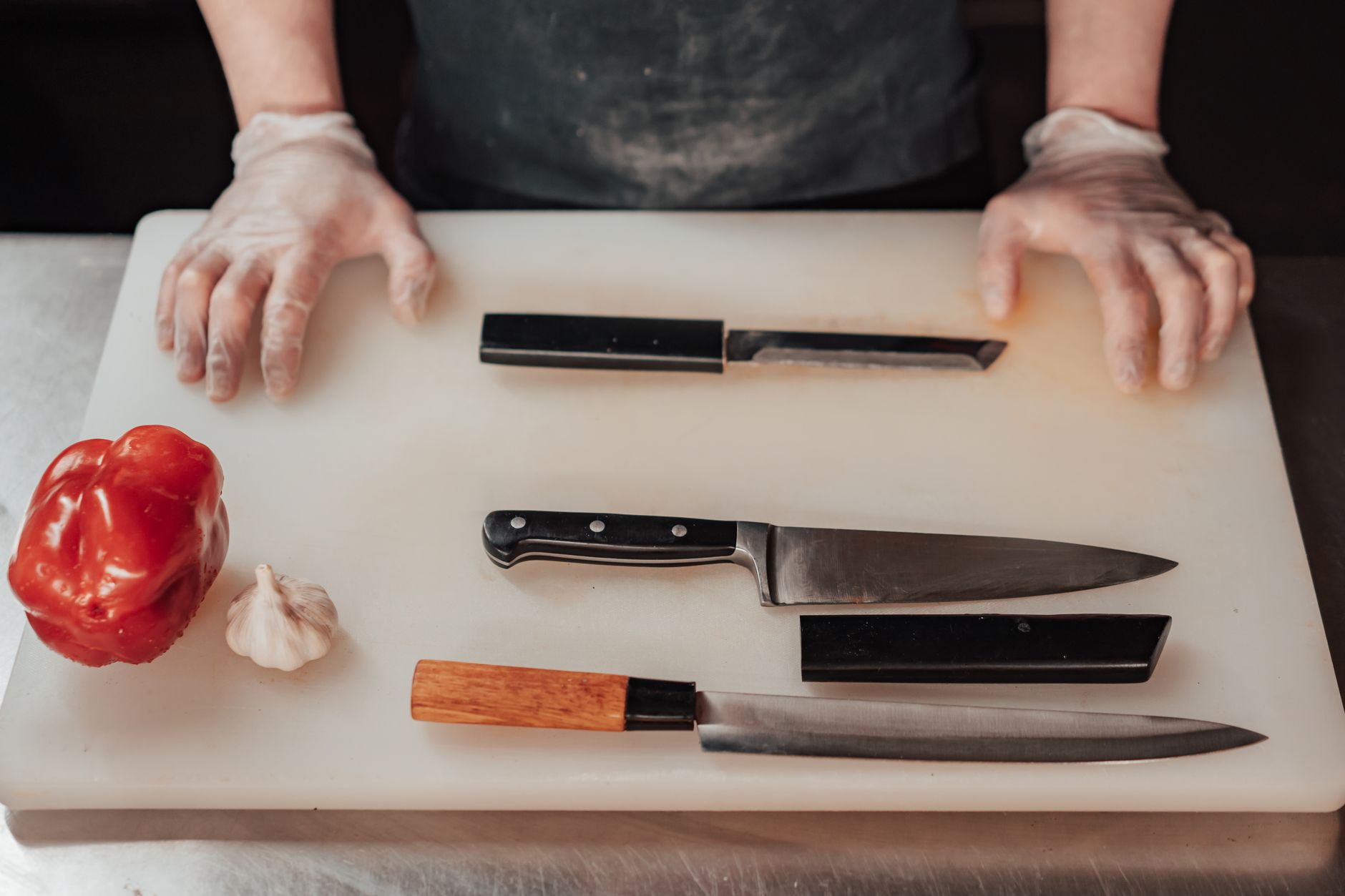 Photo by Mikhail Nilov / Pexels
Most home cooks use three knives for 90% of their cooking: a chef's knife, a paring knife, and a serrated bread knife. Everything else in a typical 15-piece block set goes largely unused. Buying one excellent chef's knife will improve your cooking experience more than a full set of mediocre knives.
What Knives You Actually Need
How we picked these. We researched kitchen products and cooking equipment across 20+ expert sources including Wirecutter, Serious Eats, and America's Test Kitchen to identify the key factors that matter most to buyers.
How we researched this. We researched kitchen knife selection across America's Test Kitchen blade sharpness and edge retention testing, Serious Eats editorial reviews, Cook's Illustrated durability trials, and professional chef community input to identify the steel grades, edge geometry, and handle designs that deliver the best long-term performance in home kitchens.
Before buying, identify which knives you'll actually reach for. The hierarchy is clear:
- Chef's knife (8-inch): The single most important kitchen tool. Handles chopping, slicing, dicing, and mincing. If you can only buy one good knife, this is it. See our best chef's knife guide for specific picks by budget.
- Paring knife (3-4 inch): Essential for small precision tasks — peeling, trimming, deveining shrimp, cutting fruit. A good paring knife under $20 works well; expensive paring knives provide diminishing returns.
- Serrated bread knife (9-10 inch): The only knife that cleanly cuts bread without crushing it. Also excellent for tomatoes and soft fruits. A good serrated knife doesn't need to be expensive — even $20-30 gets you something functional.
- Santoku knife (6-7 inch): An Asian-influenced all-purpose knife with a shorter, wider blade. Better than a chef's knife for some cooks depending on hand size and cutting style — or a useful complement. Our santoku knife guide covers when it outperforms a chef's knife.
Knives most people don't need: boning knives (unless you break down whole birds regularly), steak knives (primarily table knives for specific use), carving knives (an 8-inch chef's knife handles most carving tasks), and fillet knives (unless you clean whole fish). Our kitchen knives explained guide covers each knife type in detail.
German vs. Japanese Steel: The Most Important Choice
This decision drives most other knife characteristics. German and Japanese knives aren't interchangeable — each has genuine strengths.
German steel (Wusthof, Henckels, Victorinox): Rockwell hardness 56-58. More flexible, more resistant to chipping, holds up to hard cuts (through bones, frozen food), and tolerates less-careful dishwashing. Edge angle is typically 20-22 degrees per side, resulting in a more durable but slightly less acute edge. Requires more frequent honing but less frequent sharpening than Japanese knives. Best for: home cooks who use knives heavily, cut harder foods, or want lower maintenance.
Japanese steel (Shun, Global, MAC, Miyabi): Rockwell hardness 60-65. Harder steel holds an edge longer between sharpenings but is more brittle — can chip if used on hard frozen food or bone. Edge angle is typically 15-16 degrees per side, creating a sharper, thinner edge that's exceptional for precise slicing. More expensive to sharpen (requires water stones, not pull-through sharpeners). Best for: cooks who value maximum sharpness for precise vegetable work and fish.
Our detailed comparison of German vs Japanese kitchen knives covers the steel science in full.
What Makes a Knife Actually Good: Construction Details
Beyond steel type, these construction details separate good knives from bad ones:
- Full tang vs. partial tang: Full tang (steel runs from blade tip through the full length of the handle) provides better balance and durability. Partial tang knives feel handle-heavy and can loosen over time. Almost all quality knives are full tang — it's a baseline requirement, not a premium feature.
- Handle material and shape: Hold the knife before buying if possible. The handle should fit your grip — not too large, not too small. Western (bolstered) handles suit grip-forward cooks; Eastern (no bolster) handles suit pinch-grip cutters. POM and G10 handle materials are more durable and hygienic than natural wood.
- Bolster: The thick metal junction between blade and handle. A full bolster provides finger protection and balance but makes the entire blade edge unusable (you can't sharpen to the heel). A half bolster allows sharpening the full blade. Most professional chefs prefer half-bolster or bolster-free designs.
- Balance point: The balance point should be at or near the bolster when you hold the knife in pinch grip. A blade-heavy knife is tiring; a handle-heavy knife is imprecise.
Watch Before You Buy
Frequently Asked Questions
What is the most important factor when choosing kitchen knives?
How long does choosing the right kitchen knives typically take?
What mistakes do beginners make when buying kitchen knives?
Is it better to buy kitchen knives online or in a store?
How often should I replace or upgrade kitchen knives?
What budget should I set for kitchen knives?
Are there any red flags to watch out for when buying kitchen knives?
How We Analyze Products
We analyze Amazon review data — often thousands of reviews per product — to surface patterns that individual buyers miss. Our process aggregates star ratings, review counts, and buyer sentiment at scale, identifying which strengths and weaknesses appear consistently across the largest review samples available.
Each product earned its placement through data: total review volume, average rating, and the specific praise and complaints that repeat most often across buyers. No manufacturer paid for placement on this page. Products appear here because buyers endorsed them at scale, not because a company asked us to feature them.
We use AI to summarize review sentiment — not to fabricate opinions, but to condense what thousands of buyers actually wrote into a readable format. The pros and cons you see reflect the most common themes found in verified purchaser reviews, paraphrased for clarity. We do not claim to have accessed Reddit, YouTube, or specific publications in generating these summaries.
Prices shown reflect Amazon pricing at the time this page was last generated. Click “See Today’s Price” to get the current live price on Amazon. Read our full methodology →