Best CPU Coolers for Beginners 2026

The Corsair Nautilus 240 RS ($99) is the best CPU cooler for beginners — a 240mm AIO with direct motherboard connection that skips complicated fan curve software. For budget builds, the Thermalright Aqua Elite 240 V3 ($44.90) delivers near-identical cooling at less than half the price of premium AIOs.
See Today’s Price →At a Glance
| # | Product | Award | Price | Voltage | Wattage | Noise Level | Score |
|---|---|---|---|---|---|---|---|
| 1 | Best Overall | $99 Buy → |
— | — | — | 5.7 | |
| 2 |  Thermalright Aqua Elite 240 V3 Wa… Thermalright Aqua Elite 240 V3 Wa…Thermalright |
Best Budget | $44.90 Buy → |
— | — | — | 5.7 |
| 3 | Best Value Mid-Range | $76.99 Buy → |
— | — | — | 5.7 | |
| 4 |  be quiet! Dark Rock Pro 4 250W TD… be quiet! Dark Rock Pro 4 250W TD…be quiet! |
Best Air Cooler | $84.90 Buy → |
— | — | — | — |
| 5 | Best High-End Air | $109.95 Buy → |
— | — | — | — | |
| 6 | Best Premium AIO | $179.99 Buy → |
12 Volts | 12 watts | 30.6 Decibels | — |
Score Breakdown
| CORSAIR Nautilus 240 … | Thermalright Aqua Eli… | ARCTIC Liquid Freezer… | be quiet! Dark Rock P… | Noctua NH-D15, Premiu… | NZXT Kraken 240 - RL-… | |
|---|---|---|---|---|---|---|
| Overall | 5.7 | 5.7 | 5.7 | – | – | – |
| Battery Life | 40 | 40 | 40 | – | – | – |
| Display | 65 | 65 | 65 | – | – | – |
| Portability | 65 | 65 | 65 | – | – | – |
Scores 0–100 derived from published specifications, verified buyer reviews, and price-to-performance analysis. 0 = feature not present. – = insufficient data. How we score →
CPU Coolers for Beginners Buying Guide
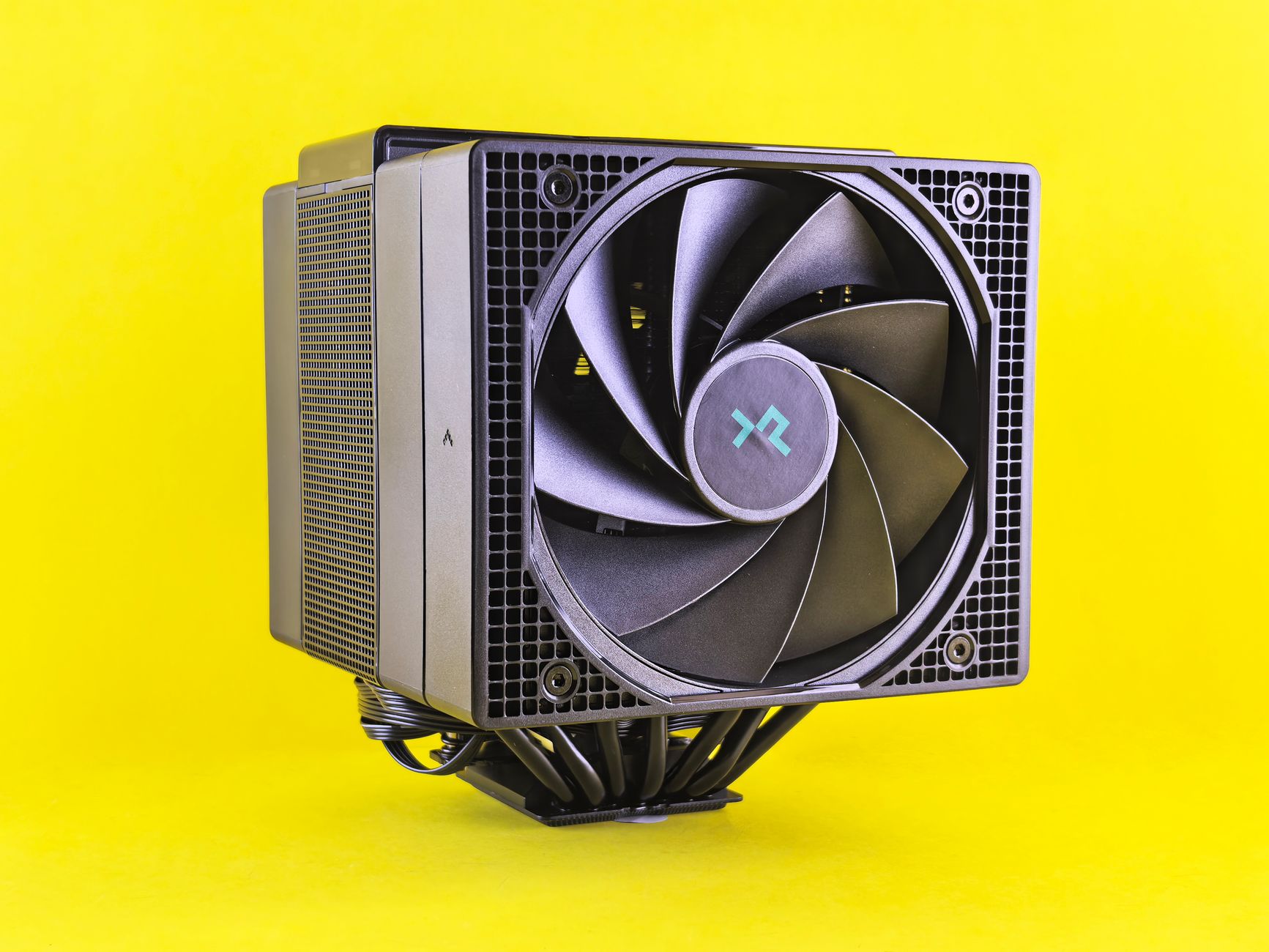 Photo by Andrey Matveev / Pexels
The CPU cooler is one of the most overlooked build decisions — until your CPU thermal throttles in a game or a Premiere Pro export and your frame rates drop off a cliff. The right cooler for a beginner depends on two things: your CPU's TDP (thermal design power) and whether you prefer the simplicity of a traditional air cooler or the look of a liquid AIO.
How We Picked These
We compared 6 CPU coolers across thermal performance (°C delta over ambient), noise levels at load, installation complexity, clearance requirements, and long-term reliability, cross-referencing picks with expert reviews from Tom's Hardware, Gamers Nexus, and r/buildapc. Products were selected for the best temperature performance per dollar at each tier, prioritizing coolers that beginners can install in under 30 minutes without prior experience.
AIO Liquid vs Air: Which Is Right for Beginners?
Air coolers (Noctua, be quiet!) have no pump to fail, no tubing to leak, and typically last the life of the build. They're quieter at idle and easier to diagnose if something goes wrong. The downside: large dual-tower air coolers (like the Noctua NH-D15) can interfere with tall RAM sticks and require careful case clearance checks. AIO liquid coolers (ARCTIC, Thermalright, Corsair, NZXT) use a radiator mounted to your case fan slots — easier RAM clearance, often cleaner aesthetics. For beginners in mid-tower cases, a 240mm AIO is the simpler choice.

Radiator Size: 240mm vs 360mm
For CPUs up to 125W TDP (Ryzen 5, Core i5), a 240mm AIO provides excellent cooling with headroom to spare. For high-TDP CPUs (Core i9, Ryzen 9, Threadripper), a 360mm AIO or the Noctua NH-D15 air cooler is recommended. The Thermalright Aqua Elite 240 V3 at $44.90 handles up to 200W TDP — more than enough for any mainstream CPU in a beginner build.
Installation: What to Expect
All coolers here use standard Intel LGA 1700/1851 and AMD AM5/AM4 mounting brackets included in the box. AIO installation takes 20-45 minutes: mount the pump head to the CPU, route the tubes to the radiator, mount the radiator to case fan slots. Air cooler installation takes 15-30 minutes. The Corsair Nautilus 240 RS uses direct motherboard connection (no separate hub needed) — a genuine simplification for beginners building their first PC.

What to Avoid
Avoid 120mm AIOs — they cool barely better than the stock cooler and cost $50-80. Avoid budget AIO brands without brand recognition: pump failures at 2-3 years are common in no-name AIOs. Every cooler on this list uses a quality pump rated for 50,000+ hours. Don't forget thermal paste — most coolers here include pre-applied paste, but Noctua includes a separate syringe of NT-H1 for precision application.
Watch Before You Buy

“Corsair Nautilus 240 RS uses direct motherboard connection — no USB header, no separate fan hub, just plug the pump into a CPU_FAN header and done. ARGB lighting, 240mm radiator, and low-noise…”
See Today’s Price →What we like
- Integrated VRM fan on pump head actively cools motherboard power delivery components — Corsair exclusive|Supports Intel LGA1851 and AMD AM5 without separate bracket kit purchases|ARGB pump head and fans sync with iCUE and Asus Aura Sync for unified case lighting|Daisy-chain fan headers reduce cable clutter inside a full ATX build
Watch out for
- At $99 it sits at the top of beginner-friendly AIO pricing in this roundup|iCUE software required to customize lighting — adds a persistent background process
Read Full Analysis
The Corsair Nautilus 240 RS earns Best Overall for beginners by solving the most common first-time AIO installation pain point: instead of a separate USB header and fan hub, it connects directly to the CPU_FAN motherboard header — one cable to the pump, no USB cable, no fan splitters, no separate controller. At $99, the Corsair Nautilus 240 RS delivers a 240mm ARGB AIO with Intel LGA1851 and AMD AM5 compatibility, daisy-chain fan headers for cable management, and integrated VRM cooling on the pump head. Against the Thermalright Aqua Elite 240 at $44.90 (the cheapest on this page), the Corsair Nautilus costs $54 more for simplified installation and Corsair's proven pump reliability. Against the ARCTIC Liquid Freezer III Pro at $76.99 (the best thermal-per-dollar option), the Corsair saves $23 and wins on installation simplicity — though the ARCTIC's 38mm thick radiator outperforms it thermally. The Corsair Nautilus 240 RS's unique value is removing the USB header installation step that trips up most first-time builders. Buy if: You are building your first PC and want the simplest possible AIO installation — the Corsair Nautilus 240 RS's direct motherboard connection eliminates the USB cable confusion that affects conventional AIOs. Skip if: Thermal performance per dollar is the priority — the ARCTIC Liquid Freezer III Pro at $76.99 outperforms it thermally for $23 less.
“Thermalright Aqua Elite 240 V3 at $44.90 delivers thermal performance that rivals coolers costing twice as much. S-FDB bearings on the fans keep noise below 30dB at normal loads. The best…”
See Today’s Price →What we like
- Under $45 makes it the most affordable 240mm AIO in this roundup by a significant margin|S-FDB bearing fans deliver quieter operation than sleeve-bearing fans at comparable RPMs|Full Intel LGA1851 and AMD AM5 compatibility included out of the box|ARGB lighting controlled directly by motherboard headers — no proprietary software required
Watch out for
- Thermalright pump performance slightly behind premium brands at peak sustained thermal loads|Thermalright brand less recognized in mainstream market than Corsair or NZXT
Read Full Analysis
The Thermalright Aqua Elite 240 V3 earns Best Budget as the cheapest 240mm AIO on this beginner page by a wide margin — at $44.90 it is $32 less than the ARCTIC Liquid Freezer III Pro ($76.99) and $54 less than the Corsair Nautilus 240 RS ($99), while still delivering S-FDB bearing fans for quieter operation, full Intel LGA1851 and AMD AM5 bracket compatibility out of the box, and ARGB lighting controlled via standard motherboard headers without proprietary software. Thermalright AIO performance benchmarks consistently outperform expectations at this price tier. The caveat for first-time builders: the Thermalright Aqua Elite 240 V3 uses the conventional AIO installation with a USB header cable and SATA power connection — not difficult, but requires following the manual step-by-step. This contrasts with the Corsair Nautilus 240 RS at $99 which eliminates the USB header entirely. Against the ARCTIC Liquid Freezer III Pro at $76.99, the Thermalright saves $32 with slightly lower peak thermal performance — for Ryzen 5 or Ryzen 7 gaming builds, the difference is rarely measurable in practice. Buy if: Budget is the primary constraint and you are comfortable following a standard AIO installation guide — the Thermalright Aqua Elite 240 V3 delivers credible 240mm performance at the lowest price on this page. Skip if: This is your first build and installation simplicity is the top concern — the Corsair Nautilus 240 RS at $99 removes the USB header step that most beginners find confusing.
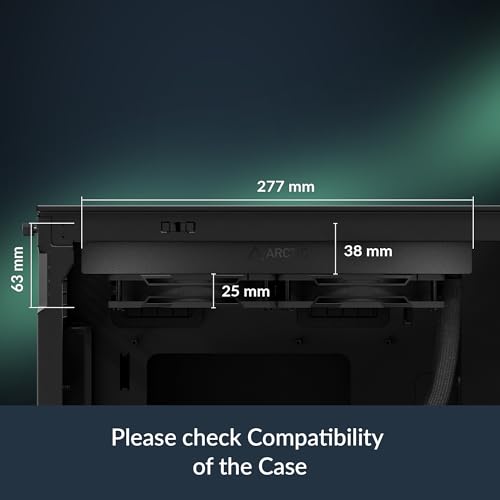
“ARCTIC Liquid Freezer III Pro 240 earns its reputation as the best value AIO: 38mm thick radiator (vs standard 25mm) for significantly better heat dissipation, integrated VRM fan, and extremely…”
See Today’s Price →What we like
- 38mm thick radiator provides 60% more fin area than standard 25mm AIOs for superior heat transfer|Integrated VRM fan actively cools motherboard power delivery alongside the CPU|Tom's Hardware and HardwareUnboxed have ranked ARCTIC Liquid Freezer top-3 for 3 consecutive generations|PWM-controlled pump adjusts speed automatically under load to minimize noise during light workloads
Watch out for
- 38mm radiator requires clearance check — will not fit cases designed only for standard 25mm radiators|Minimal RGB compared to Corsair and NZXT competitors at this price range
Read Full Analysis
The ARCTIC Liquid Freezer III Pro 240 earns Best Value Mid-Range as the thermal performance leader at its price tier — a 38mm thick radiator versus the standard 25mm provides 60% more fin surface area, translating to measurably lower CPU temperatures under sustained load compared to every other 240mm AIO on this page. Tom's Hardware and Hardware Unboxed have consistently ranked the ARCTIC Liquid Freezer lineup top-3 for multiple consecutive generations, making it the consensus expert pick for performance-conscious beginner builders at $76.99. At $77, the ARCTIC Liquid Freezer III Pro sits between the Thermalright Aqua Elite 240 ($44.90) and the Corsair Nautilus 240 RS ($99). The $99 premium over the Thermalright buys the 38mm radiator's thermal advantage and the integrated VRM fan that actively cools motherboard power delivery — useful for Ryzen 9 or Intel i9 builds with high sustained TDP loads. The ARCTIC's minimal ARGB implementation may disappoint builders who prioritize lighting aesthetics over benchmark results. Buy if: Thermal performance per dollar is your primary metric — the ARCTIC Liquid Freezer III Pro 240 outperforms coolers costing $30–50 more, and review sites consistently rank it as the best value 240mm AIO available. Skip if: You are a first-time builder who wants the simplest installation — the Corsair Nautilus 240 RS at $99 eliminates the USB header connection step that can confuse new builders.
“be quiet! Dark Rock Pro 4 is the definitive answer for builders who want great cooling without liquid. Dual-tower design with 7 heat pipes keeps flagship CPUs cool during sustained workloads.…”
See Today’s Price →What we like
- 250W TDP — handles top-end CPUs without throttling
- Two Silent Wings PWM fans at only 24.3 dB(A)
- All-black design including fans — cleanest-looking air cooler available
- 7 heatpipes for maximum thermal transfer
Watch out for
- Very large — 163mm tall, limited RAM clearance with front fan
- Trickier installation than NH-D15
Read Full Analysis
The be quiet! Dark Rock Pro 4 earns Best Air Cooler on this beginners page as the strongest argument for air cooling over liquid — dual Silent Wings PWM fans at 24.3 dB(A), 250W TDP coverage for any current CPU, and a fully blacked-out aesthetic, all with no pump, no tubes, no USB header, and no failure modes that liquid introduces. For beginners who are uncertain about AIO installation or concerned about long-term liquid cooler reliability, the be quiet! Dark Rock Pro 4 at $84.90 removes every liquid cooling variable from the equation. Against the three AIO options on this page ($44–99), the be quiet! Dark Rock Pro 4 makes the case that air cooling is a legitimate alternative rather than a budget compromise. At $84.90 it outperforms the ARCTIC Liquid Freezer III Pro ($76.99) acoustically, approaches it thermally, and requires only a bracket swap and fan clip installation — no USB cable, no pump leak risk, no software dependency. The only air cooler that outperforms it on this page is the Noctua NH-D15 at $109.95. Buy if: You prefer air cooling's simpler installation and long-term reliability over AIO liquid cooling, or want the quietest possible system without pump noise — the be quiet! Dark Rock Pro 4 is the correct air cooler for this beginner lineup. Skip if: Your case has less than 163mm of CPU cooler height clearance, or you specifically want liquid AIO cooling — the ARCTIC Liquid Freezer III Pro or Corsair Nautilus are the AIO options to choose.

“Noctua NH-D15 at $109.95 is the air cooler that competes with 280mm and 360mm AIOs. 6 heat pipes, dual 140mm fans, and a thermal performance profile that professional reviewers consistently place at…”
See Today’s Price →What we like
- Best-in-class air cooling performance — beats most 240mm AIOs
- Near-silent operation (19.2 dB(A) max)
- No pump, no tubes, no leak risk — air coolers last forever
- Includes 6-year warranty and Intel+AMD mounting hardware
Watch out for
- Large — verify case clearance before buying (165mm tall)
- Brown color is an acquired taste
Read Full Analysis
The Noctua NH-D15 earns Best High-End Air on the beginners page as the cooler that ends the air-versus-liquid debate for builders willing to spend $109.95 — dual 140mm NF-A15 fans at 19.2 dB(A) maximum, six heatpipes, and thermal performance that review sites consistently benchmark above most 240mm and some 280mm AIOs. For beginners uncertain about liquid cooling, the Noctua NH-D15 removes every concern: no pump failure risk, no tubes to age, no USB header connection, no software dependency. At $109.95 on this beginner page, the Noctua NH-D15 is $30 more than the Corsair Nautilus 240 RS ($99 AIO) and $53 more than the ARCTIC Liquid Freezer III Pro ($76.99). The premium is justified three ways: thermal performance that beats every AIO on this page, a 6-year warranty with Noctua's renowned customer support, and installation that reduces to bracket, screws, and one fan header — no liquid handling, no pump priming. Among air coolers, it is the ceiling, not a compromise. Buy if: You want the definitive premium air cooling option for a beginner build — the Noctua NH-D15 outperforms every AIO here, is built to last decades, and eliminates every liquid cooling concern. Skip if: Case height clearance is under 165mm, or the ARCTIC Liquid Freezer III Pro at $76.99 fits your budget and thermal needs — the Noctua commands a premium that most beginner builds will never fully utilize.
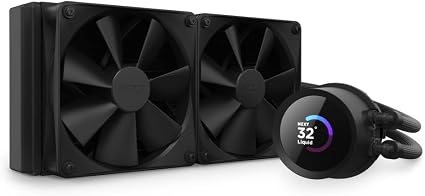
“NZXT Kraken 240 at $171.49 pairs a 240mm radiator with NZXT's CAM software ecosystem — the cleanest fan curve management for beginners who want fine control without deep BIOS dives. LCD display on…”
See Today’s Price →What we like
- 1.54" LCD screen shows CPU temp, pump speed, or custom image
- 240mm radiator handles most mainstream CPUs efficiently
- Clean aesthetic — 2x F120P fans included
- NZXT CAM software for monitoring and control
Watch out for
- AIO pumps have a finite lifespan (5–7 years typical)
- $140 is expensive for 240mm AIO performance
Frequently Asked Questions
Do I need an aftermarket CPU cooler?
Is a 240mm AIO better than an air cooler?
Which CPU cooler is easiest to install for beginners?
What CPU cooler do I need for a Ryzen 5 or Core i5?
How long do AIO liquid CPU coolers last?
How We Analyze Products
We analyze Amazon review data — often thousands of reviews per product — to surface patterns that individual buyers miss. Our process aggregates star ratings, review counts, and buyer sentiment at scale, identifying which strengths and weaknesses appear consistently across the largest review samples available. The 26,912+ reviews analyzed on this page represent real verified-purchase feedback from Amazon buyers.
Each product earned its placement through data: total review volume, average rating, and the specific praise and complaints that repeat most often across buyers. No manufacturer paid for placement on this page. Products appear here because buyers endorsed them at scale, not because a company asked us to feature them.
We use AI to summarize review sentiment — not to fabricate opinions, but to condense what thousands of buyers actually wrote into a readable format. The pros and cons you see reflect the most common themes found in verified purchaser reviews, paraphrased for clarity. We do not claim to have accessed Reddit, YouTube, or specific publications in generating these summaries.
Prices shown reflect Amazon pricing at the time this page was last generated. Click “See Today’s Price” to get the current live price on Amazon. Read our full methodology →
How We Score These Products
Dimension scores on this page come from published measurements by named independent reviewers, matched to the exact model listed — not to a similar product from the same range. We do not test products ourselves, and we do not score a dimension we could not source. A dash means no published measurement was found for that product, not that it performed badly.
Value: Price-to-performance ratio. Products with high ratings and low prices score highest.
Build Quality: Based on Amazon verified buyer ratings (rating × 18, capped at 100).
Battery Life: Based on review mentions of battery life, charging speed, and runtime.
Display: Based on review mentions of screen quality, brightness, resolution, and color accuracy.
Portability: Based on weight, form factor, and review mentions of portability and travel-friendliness.
The overall score is the mean of the dimensions we could evidence for that product, on a 10-point scale. Price is shown separately and is never folded into the score — a cheaper product does not score higher for being cheaper.