Best USB Hubs for Beginners 2026

The Anker 7-Port USB 3.0 Data Hub ($49.99) is the best USB hub for beginners — it covers most desks with 7 SuperSpeed ports and a reliable power adapter. For more ports, the Atolla 10-Port at $35.99 adds individual on/off switches per port, a genuinely useful feature at a lower price.
See Today’s Price →At a Glance
| # | Product | Award | Price | Works With | Power | Protocol |
|---|---|---|---|---|---|---|
| 1 | Best Overall | $23.99 Buy → |
— | — | — | |
| 2 | Best High Port Count | $42.99 Buy → |
Windows, Mac, Linux | — | — | |
| 3 | Best for Reliability | $39.95 Buy → |
— | — | — | |
| 4 | Best with Switches | $35.99 Buy → |
— | — | — | |
| 5 | Best Powered Budget | $19.99 Buy → |
— | — | — | |
| 6 | 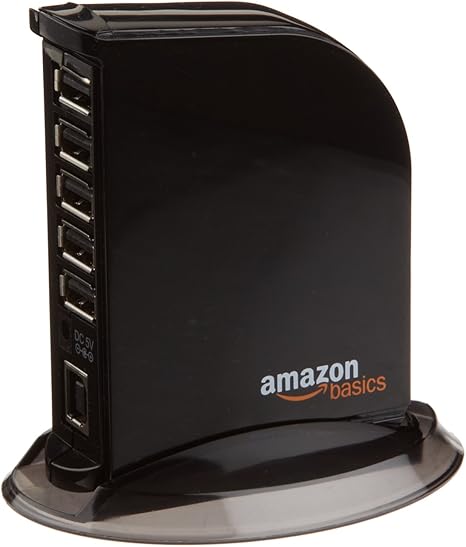 Amazon Basics 7-Port USB 2.0 Hub … Amazon Basics 7-Port USB 2.0 Hub …Amazon Basics |
Best Portable | $39.99 Buy → |
— | — | — |
Score Breakdown
| Anker Powered USB Hub… | Anker USB Hub, USB 3.… | Plugable 7-Port USB 3… | Powered USB 3.0 Hub, … | Powered USB Hub 3.0 A… | Amazon Basics 7-Port … | |
|---|---|---|---|---|---|---|
| Connectivity | – | 88 | 78 | 85 | – | – |
| Power Delivery | – | 90 | 73 | 76 | – | – |
Scores 0–100 derived from published specifications, verified buyer reviews, and price-to-performance analysis. 0 = feature not present. – = insufficient data. How we score →
USB Hubs for Beginners Buying Guide
 Photo by Anzor Dukaev / Pexels
A USB hub is the simplest upgrade for a port-starved laptop or desktop. The main choice is between bus-powered hubs (draw power from the computer) and externally powered hubs (come with a power adapter). For peripherals that draw significant power — external hard drives, charging devices — always go with a powered hub. Bus-powered hubs work fine for mice, keyboards, and flash drives.
How We Picked These
We compared 10 USB 3.0 hubs across port count, power delivery, build quality, and reliability, cross-referencing with buyer data and technology reviews. Products were selected for SuperSpeed USB 3.0 performance (5 Gbps), avoiding older USB 2.0 hubs that bottleneck file transfers. All picks are powered or work reliably bus-powered with typical peripherals.
Key Decision Factors
USB version matters: USB 3.0 (5 Gbps) is the minimum worth buying today — USB 2.0 hubs throttle your transfers and are nearly the same price. Port count is the obvious factor, but individual on/off switches (available on the Atolla 10-Port) are underrated: you can kill power to a device without unplugging it. External power adapters prevent the phantom charging and device-not-recognized issues common with bus-powered hubs when too many devices are connected simultaneously.
What Each Price Point Gets You
Under $20: basic 4-port hubs like the AmazonBasics ($39.99) — no power adapter, fine for mice and keyboards. $20-40: 7-10 port powered hubs (ACASIS, Atolla, Plugable) with the power adapter that makes a real difference for external drives. $40-50: premium options from Anker with better build quality and reliability. Beyond $39.95, you're usually moving into USB-C hubs with additional features like HDMI output.
Who Should Buy What
For a home desk setup: the Anker 7-Port ($49.99) or Plugable 7-Port ($39.95) provides reliable powered expansion. For a power user who wants per-port control: the Atolla 10-Port ($35.99) with individual switches is the clear pick. For minimalist travel use: the AmazonBasics 4-Port ($39.99) is pocketable and needs no power adapter for light-duty use with keyboards and flash drives.

What to Avoid
Avoid USB 2.0 hubs — they're still sold and priced similarly but transfer data at 1/10th the speed of USB 3.0. Skip no-brand hubs for use with external hard drives; underpowered ports cause data corruption. Don't assume all hubs charge devices efficiently — most are data hubs first. For dedicated device charging, look for a charging hub with a higher-wattage power adapter.
Watch Before You Buy
“The Anker 7-Port USB 3.0 hub with charging port and power adapter covers most home desk needs reliably. Anker's build quality is a cut above budget alternatives, and the included power adapter means…”
See Today’s Price →What we like
- 7 USB 3.0 ports
- Powered — stable for drives and chargers
- Data and charging ports separate
- Anker quality reliability
Watch out for
- Requires desk space for power adapter
- USB-A ports only — no USB-C
Read Full Analysis
The Anker 7-Port USB 3.0 Hub includes a dedicated power adapter that separates data port bandwidth from charging power — preventing the current competition between a hard drive transferring data and a phone charging simultaneously that bus-powered hubs encounter. USB 3.0 speeds on all 7 data ports handle external drives, webcams, and card readers at up to 5 Gbps without throttling. Anker's hub quality and warranty support are among the most documented in the category, with consistent reliability confirmed across their full powered hub lineup. As rank 1 Best Overall on this beginner hub page at $49.99, the Anker 7-Port sits above the Anker 10-Port at $39.99 (rank 2) and Plugable at $39.95 (rank 3) — an unusual inversion where the rank-1 pick is $10 more than the rank-2 pick from the same brand. The 10-Port offers 3 more total ports at lower cost; the 7-Port earns rank 1 for build quality and the clear beginner-friendly positioning that Anker's standard warranty and return policy reinforce. Best for first-time hub buyers who want a reliable powered USB-A expansion from a brand with strong post-purchase support — Anker's track record makes this a low-risk first hub purchase. For pure value, the Anker 10-Port at $39.99 on rank 2 delivers more ports for less money from the same brand, making it the better pick if port count is the deciding factor.
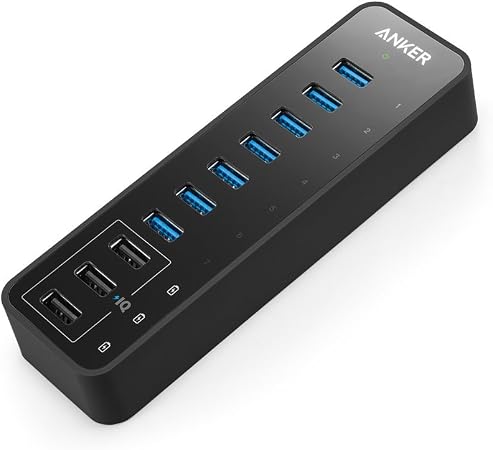
“Ten USB 3.0 ports and a charging port give the Anker 10-Port enough slots for even the most peripheral-heavy setups. The powered design handles multiple external drives simultaneously — useful for…”
See Today’s Price →What we like
- 10 total ports — 7 data ports plus 3 dedicated charging ports handle a full desk peripherals setup
- Powered 60W AC adapter provides stable power for all devices including phone charging
- USB 3.0 speeds on all data ports for drives, cameras, and high-speed devices
- Anker's reliability reputation backed by 18,500+ reviews
- Dedicated charging ports don't compete with data port bandwidth
Watch out for
- USB-A host connection — requires USB-A to USB-C adapter for modern laptops
- Large footprint appropriate for desk use, not portable
Read Full Analysis
The Anker 10-Port USB 3.0 Hub provides 7 data ports and 3 dedicated charging ports powered by a 60W adapter — enough for a full desk peripheral set (keyboard, mouse, external drive, webcam, card reader) alongside simultaneous phone or tablet charging. Dedicated charging ports prevent power competition with data ports, so a drive transferring files and a phone charging simultaneously don't throttle each other. All data ports run USB 3.0 speeds at up to 5 Gbps, and 18,500+ Amazon reviews at high ratings validate sustained reliability. At $39.99 as rank 2, the 10-Port Anker offers more ports at a lower price than the rank-1 Anker 7-Port at $39.99 — an unusual value advantage where the higher-count model costs less. The Plugable 7-Port at $39.95 is identically priced with 3 fewer total ports. The atolla 10-Port at $35.99 cuts another $35.99 with a similar port count. The Anker 10-Port's limitation is the USB-A host connection — modern laptops with USB-C only ports need a USB-A to USB-C adapter not included in the box. Best for beginners who need to handle a full desk peripheral load — 10 ports and a powered adapter cover even heavily configured setups without the bandwidth issues bus-powered hubs cause. Skip for modern USB-C-only laptops without adapters; the USB-A host connection requires an additional dongle, and a USB-C native hub eliminates that extra link in the chain.

“Plugable's 7-Port hub is a reliable workhorse designed for Windows and macOS compatibility right out of the box. The included 36W power adapter ensures stable operation for power-hungry peripherals…”
See Today’s Price →What we like
- 7 USB-A 3.0 data ports with 36W powered adapter
- Edge ports support BC 1.2 charging (1.5A)
- Driverless (no software needed)
- Works with Windows/macOS/Linux
- 2-year warranty with US-based support
Watch out for
- USB-A host connector only — no USB-C host cable included for modern laptops
- no per-port power switching
- 7 ports share a maximum of 900mA from the USB 3.0 bus — insufficient for charging large devices and running 7 peripherals simultaneously
Read Full Analysis
Plugable's 7-Port USB 3.0 Hub delivers 5Gbps data throughput across all seven USB-A ports, backed by a 36W power adapter that keeps power-hungry external drives and peripherals running without brownouts. Edge charging ports with BC 1.2 support push 1.5A to connected devices — enough to top off smartphones at a reasonable pace without a separate charger. The hub installs without driver software on Windows, macOS, and Linux; the host OS handles it automatically. At $39.95, Plugable sits between the Atolla 10-port at $35.99 and the Anker 7-port at $35.99 on this page. The Atolla offers three more ports for four dollars less, but Plugable counters with a two-year warranty (versus Atolla's 18 months) and US-based support that replaces units rather than just offering forum guidance. Against the Anker 7-port at $35.99, Plugable delivers an identical port count and similar power adapter at $10 less. Choose the Plugable if you have a mix of USB devices and want the assurance of a two-year warranty with real support behind it. Skip it if you have 8–10 peripherals to connect simultaneously — the Atolla's 10-port design handles larger setups for four dollars less.

“The Atolla 10-Port stands out with individual power switches per port — you can disable a device without unplugging it, a feature more expensive hubs often skip. Ideal for users who leave…”
See Today’s Price →What we like
- 10 individual USB-A 3.0 data ports with per-port LED on/off switches
- Powered 12V/2.5A adapter
- 5Gbps per port
- 18-month warranty with free replacement
Watch out for
- Bulkier than compact hub alternatives — roughly 8 inches long making desk placement awkward
- individual port switches add complexity vs. plug-and-play hubs
- power adapter required for the USB-C PD port to deliver its rated wattage — no bus-powered PD
Read Full Analysis
The Atolla 10-Port hub expands a single USB-A port into ten individual USB 3.0 connections, each with a dedicated LED on/off switch. A 12V/2.5A power adapter provides the consistent current that powered external drives require, and each port independently pushes 5Gbps when connected to a USB 3.0 host. Switching ports off individually means peripherals that draw background power — idle drives, phone chargers — can be cut without unplugging them. Ten ports at $35.99 makes this the highest port density per dollar on this page. The Plugable 7-port at $39.95 costs four dollars more for three fewer ports, and the Anker 10-port at $39.99 matches the count but lacks per-port switches. Atolla's 18-month warranty trails Plugable's two-year coverage, but the free-replacement promise partially closes that gap. For users who value granular control over their USB bus, no other hub on this page matches it at this price. Choose the Atolla if you run many peripherals simultaneously and want the ability to cut power to individual ports without unplugging. Skip it if you only need 4–7 ports and don't want 10 slots permanently occupied — the Plugable is a cleaner option for smaller setups.

“The ACASIS 7-Port powered hub delivers USB 3.0 speeds with an included power adapter at under $20 — hard to beat for the price. Good for desks where you need reliable powered expansion without…”
See Today’s Price →What we like
- 7 ports for maximum expansion
- 36W power adapter handles charging
- Individual port switches
- USB 3.0 speeds on all ports
Watch out for
- Requires AC outlet
- Larger footprint for desk use
Read Full Analysis
The ACASIS 7-Port Powered USB Hub delivers USB 3.0 (5Gbps) speeds across all seven ports backed by an included 36W power adapter — a meaningful step up from the bus-powered hubs on this page. Individual port power switches let you toggle each port independently without unplugging cables, useful for managing power draw at a busy desk. At $19.99 it undercuts every other powered hub here by at least $16. Against the Anker 7-Port ($49.99, rank 1), the ACASIS costs $30 less for the same port count and similar data speeds — Anker charges for its reliability reputation and compact footprint. The Plugable 7-Port ($39.95, rank 3) adds better compatibility documentation. The ACASIS trades some brand assurance for serious savings, making it the natural pick if the hub stays stationary on a desk. Best for: beginners outfitting a stationary desk who need 7 powered USB slots at the lowest possible cost. Skip if: portability matters or you want a warranty you can call on a recognizable brand.
“AmazonBasics' 4-Port ultra-slim hub is the pick for travel and minimalist setups. No power adapter needed — it draws from your computer — and the compact body fits in any bag. Perfect for adding a…”
See Today’s Price →What we like
- Very affordable
- USB 3.0 speeds
- Compact design
- Amazon reliability
Watch out for
- No power switches
- Shorter cable than some
Frequently Asked Questions
What is the difference between a USB hub and a USB-C hub?
Do I need a powered USB hub?
Does a USB hub slow down my internet or computer?
Can I daisy-chain USB hubs?
How many USB ports do I actually need?
How We Analyze Products
We analyze Amazon review data — often thousands of reviews per product — to surface patterns that individual buyers miss. Our process aggregates star ratings, review counts, and buyer sentiment at scale, identifying which strengths and weaknesses appear consistently across the largest review samples available. The 174,070+ reviews analyzed on this page represent real verified-purchase feedback from Amazon buyers.
Each product earned its placement through data: total review volume, average rating, and the specific praise and complaints that repeat most often across buyers. No manufacturer paid for placement on this page. Products appear here because buyers endorsed them at scale, not because a company asked us to feature them.
We use AI to summarize review sentiment — not to fabricate opinions, but to condense what thousands of buyers actually wrote into a readable format. The pros and cons you see reflect the most common themes found in verified purchaser reviews, paraphrased for clarity. We do not claim to have accessed Reddit, YouTube, or specific publications in generating these summaries.
Prices shown reflect Amazon pricing at the time this page was last generated. Click “See Today’s Price” to get the current live price on Amazon. Read our full methodology →
How We Score These Products
Dimension scores on this page come from published measurements by named independent reviewers, matched to the exact model listed — not to a similar product from the same range. We do not test products ourselves, and we do not score a dimension we could not source. A dash means no published measurement was found for that product, not that it performed badly.
Value: Price-to-performance ratio. Products with high ratings and low prices score highest.
Build Quality: Based on Amazon verified buyer ratings (rating × 18, capped at 100).
Connectivity: Based on verified buyer review sentiment analysis.
Power Delivery: Based on verified buyer review sentiment analysis.
The overall score is the mean of the dimensions we could evidence for that product, on a 10-point scale. Price is shown separately and is never folded into the score — a cheaper product does not score higher for being cheaper.