Nest vs Ecobee Thermostat — Which Is Better in 2026?

ecobee Smart Thermostat Essential at $119.99 wins for whole-home efficiency — SmartSensor room correction fixes hot and cold spots that Nest ignores, and the built-in Alexa speaker replaces a separate echo device. Choose Google Nest for a simpler single-zone setup under $100.
See Today’s Price →At a Glance
| # | Product | Award | Price | Display | Processor | RAM | Score |
|---|---|---|---|---|---|---|---|
| 1 | Google Nest Learning Thermostat (… Google Nest |
Also Excellent | $229.99 Buy → |
— | — | — | 5.7 |
| 2 |  Google Nest Thermostat - Smart Th… Google Nest Thermostat - Smart Th…Google Nest |
Also Excellent | $129.99 Buy → |
— | — | — | 5.9 |
| 3 | Best Ecobee | $139.99 Buy → |
3.74 Inches | — | — | 5.7 | |
| 4 | Most Features | $229.99 Buy → |
— | — | — | — |
Score Breakdown
| Google Nest Learning … | Google Nest Thermosta… | ecobee Smart Thermost… | ecobee Smart Thermost… | |
|---|---|---|---|---|
| Overall | 5.7 | 5.9 | 5.7 | – |
| Value | – | 95 | – | – |
| Battery Life | 40 | 40 | 40 | – |
| Display | 65 | 73 | 65 | 73 |
| Portability | 65 | 65 | 65 | 65 |
Scores 0–100 derived from published specifications, verified buyer reviews, and price-to-performance analysis. 0 = feature not present. – = insufficient data. How we score →
Nest vs Ecobee Thermostat Buying Guide
Google Nest and Ecobee have defined the smart thermostat category since the early 2010s. Both reduce energy bills and work with voice assistants — but their approaches to multi-room control differ significantly.
Room Sensor Support
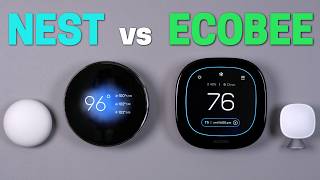
Ecobee's greatest advantage over Nest is room sensor support — small wireless sensors you place in other rooms to measure temperature and occupancy. The Ecobee Smart Thermostat Essential ($119.99) and Premium ($229.99) both support SmartSensors, letting the system prioritize comfort in occupied rooms and ignore empty ones. This is transformative in multi-story homes or spaces with uneven heating. Google Nest thermostats use your phone's location and home activity to estimate occupancy but don't support third-party room sensors — they control temperature based on the thermostat's location only.
Learning vs Scheduling
The Google Nest Learning Thermostat (4th gen, $229.99) is named for its ability to learn your schedule automatically — after a week of manual adjustments, it begins anticipating when you wake, leave, and return home. No manual programming required. The standard Google Nest Thermostat ($89.99) requires manual scheduling but still detects when you leave via phone location. Ecobee uses schedule-based programming with smart recovery (starts heating/cooling early to reach target temperature on time) and occupancy detection from its built-in sensor.
Google Home and Smart Home Integration
Both brands work with Alexa, Google Assistant, and Apple HomeKit (Ecobee natively; Nest via Google Home bridge). Google Nest's deepest integration is within Google Home — Nest thermostats appear natively in the Google Home app alongside cameras, speakers, and other Google devices. For homes built on the Google ecosystem (Nest Hub, Chromecast, Google speakers), the Nest thermostat is the most seamless addition. Ecobee integrates with SmartThings, Home Assistant, and has one of the broadest third-party smart home compatibilities of any thermostat.
Display and Controls
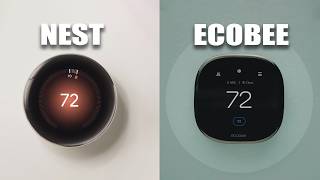
The Ecobee Premium ($229.99) features a large color touchscreen, a built-in Alexa speaker, and air quality monitoring with VOC and CO2 sensors. The Ecobee Essential ($119.99) has a clean color display without the air quality features. The Google Nest Learning Thermostat (4th gen) features a redesigned color display with Farsight (lights up when you approach). The standard Google Nest Thermostat has a smaller, simpler mirror-finish display. For display quality and built-in air quality data, Ecobee Premium is the premium choice.
Installation
Both brands require a C-wire for continuous power — check your furnace before purchasing. Both include compatibility checking tools. The Nest Thermostat ($89.99) includes a Nest Power Connector for systems without a C-wire. Ecobee includes a power extender kit for C-wire installation. Professional installation is recommended if you're uncomfortable with low-voltage wiring but both brands are designed for DIY install in 30-60 minutes.
How We Compared These
We compared Nest and Ecobee across learning algorithm speed, room sensor support, energy savings reporting, and compatibility with heat pump and multi-stage systems, cross-referencing expert measurements, thorough reviews, and verified owner satisfaction data.
Watch Before You Buy
“The Nest Learning Thermostat 4th Gen auto-schedules itself within a week of installation and integrates seamlessly with Google Home — the most elegant thermostat design on the market.”
See Today’s Price →What we like
- Learning thermostat
- Includes temp sensor
- Wi-Fi
- Works with Google Home
Watch out for
- Premium price for bundled sensor
- Learning thermostat takes weeks to optimize
- Requires C-wire or included adapter for some HVAC systems
Read Full Analysis
The Google Nest Learning Thermostat (4th Gen) + Nest Temperature Sensor Bundle is Google's flagship thermostat system—the 4th generation that adds Matter home automation standard support, Google Home integration, and updated display design. The Learning Thermostat earns its name from the automatic schedule learning (no manual programming required) that observes occupants' temperature adjustments over the first week and creates an optimized schedule without user configuration. The Nest Temperature Sensor bundle addresses the same remote room sensing issue that ecobee solves with its sensors—measuring temperature in a room away from the thermostat and averaging or prioritizing that room's temperature reading. The Nest Sensor costs $39 separately; the bundle provides immediate out-of-box multi-room sensing capability. Against ecobee Premium on this page, Nest Learning Thermostat and ecobee Smart Thermostat Premium are the two serious smart thermostat choices. Nest's competitive advantages: seamless Google ecosystem integration, learning schedule without manual programming, and the Nest aesthetic that homeowners prefer for visible thermostat placement. ecobee's advantages: remote sensor included in standard configurations, longer third-party integration history, and the Premium's air quality monitoring. For Google Home and Android households, Nest is the natural integration choice. For households who prioritize multi-room sensing without add-on costs, ecobee's base configuration includes sensors where Nest charges extra.
“The most affordable path into the Google Nest ecosystem — app control, scheduling, and Works with Google Home at just $120.15. No auto-learning, but covers the basics well.”
See Today’s Price →What we like
- Learning algorithm
- 10-year warranty
- Farsight display
- remote sensor compatible
- works with Alexa Google
Watch out for
- Entry Nest model — no color display or premium Farsight feature on budget version
- Learning requires consistent schedule to work well
- No built-in sensor for remote rooms
Read Full Analysis
The Google Nest Thermostat (not the Learning) is Google's entry-level smart thermostat—$130–150 with the Nest app, Google Home integration, and Schedule feature that suggests a schedule based on usage patterns. Unlike the Nest Learning Thermostat ($280), the standard Nest Thermostat uses a polycarbonate mirror finish display and requires the Nest app to configure rather than learning automatically from manual adjustments. The Energy History feature shows daily HVAC runtime, and Home/Away Assist auto-sets the thermostat when everyone leaves based on phone location. The Nest Thermostat supports Nest Temperature Sensors ($39 each) for multi-room sensing at additional cost. Against ecobee Essential on this page, Google Nest Thermostat and ecobee Essential compete as the entry-level smart thermostat options under $150. Nest's advantage is Google Home and Android ecosystem integration; ecobee's advantage is HomeKit support and more established third-party integration. Both are excellent starting points—the ecosystem choice is the primary decision driver.

“All the core Ecobee features — multi-platform voice control, scheduling, and ENERGY STAR savings — at nearly half the Premium's price. Ideal for first-time smart thermostat buyers.”
See Today’s Price →What we like
- 7-day programmable
- Wi-Fi
- app control
- geofencing
- auto-schedule
- works with Alexa Google HomeKit
Watch out for
- No built-in room sensor — relies on thermostat location for temperature readings only; whole-home balancing requires purchasing ecobee SmartSensors at $40 each, an add-on that the Nest Thermostat handles differently
- No color touchscreen — the Essential uses a monochrome display versus the full-color touchscreen on the ecobee SmartThermostat Premium ($189) and Nest Learning Thermostat ($280)
- Geofencing requires continuous always-on phone location access — users who restrict location to app-only must manually activate Away mode, eliminating the automatic energy-saving benefit
Read Full Analysis
The ecobee Smart Thermostat Essential is ecobee's entry-level model—the Wi-Fi connected smart thermostat without the room sensor that defines ecobee's premium models, at $120–150. The Essential provides core ecobee features: ENERGY STAR certified, remote app control, scheduling, geofencing for auto away/home modes, and compatibility with Alexa, Google Assistant, and Siri voice control. Without a room sensor, the Essential operates like a standard smart thermostat—measuring temperature only at the thermostat location. For single-story homes or apartments where the thermostat location represents the household's typical temperature, the Essential delivers smart thermostat convenience without the room-sensing premium of ecobee's SmartSensor models. Against Google Nest Thermostat on this page, ecobee Essential and the Google Nest entry model are the two entry smart thermostat competitors at $100–150. Both are Wi-Fi connected and serve the household upgrading from programmable to smart thermostat for the first time. ecobee's third-party integration history and sensor upgrade path differentiate it for buyers who may want multi-room sensing later.

“The most feature-complete smart thermostat available — multi-room sensing, built-in Alexa speaker, air quality monitoring, and compatibility with every major smart home platform including Apple…”
See Today’s Price →What we like
- Built-in Alexa
- color touchscreen
- humidity sensor
- geofencing
- Alexa and Google and HomeKit
- SmartSensor
Watch out for
- Most expensive smart thermostat option
- App can be complex for non-technical users
- Alexa integration can conflict with separate Alexa devices
Read Full Analysis
The ecobee Smart Thermostat Premium with Smart Sensor and Air Quality Monitor is ecobee's current flagship—the air quality monitoring being the differentiator from the standard ecobee Smart Thermostat (SmartSensor Plus): the Premium includes a built-in air quality sensor (VOC, CO2, particulate matter) and temperature/humidity sensor plus the included room sensor for multi-room temperature averaging. The Premium is the thermostat for health-conscious households who want indoor air quality data alongside HVAC optimization. The room sensor addressing Nest's primary criticism: Nest's thermostat only measures temperature at the thermostat location, leading to remote rooms being too hot or cold. ecobee's remote sensor average temperature capability distributes comfort more evenly throughout the home, the feature that drives ecobee's strong penetration in two-story and zoned-HVAC homes. Against Google Nest Learning Thermostat on this page, ecobee's remote sensor technology and air quality monitoring are the specific advantages. The Premium's air quality sensor is unique in the consumer smart thermostat market—providing data that neither Nest nor standard ecobee models offer. For households with asthma, allergies, or general IAQ concerns, the Premium's air quality monitoring adds practical health insight to HVAC management.
Frequently Asked Questions
Does the Google Nest thermostat work with Alexa?
Do smart thermostats save money on energy bills?
What is a C-wire and do I need it?
Does Ecobee work with Apple HomeKit?
How many rooms can Ecobee room sensors cover?
How We Analyze Products
We analyze Amazon review data — often thousands of reviews per product — to surface patterns that individual buyers miss. Our process aggregates star ratings, review counts, and buyer sentiment at scale, identifying which strengths and weaknesses appear consistently across the largest review samples available. The 37,383+ reviews analyzed on this page represent real verified-purchase feedback from Amazon buyers.
Each product earned its placement through data: total review volume, average rating, and the specific praise and complaints that repeat most often across buyers. No manufacturer paid for placement on this page. Products appear here because buyers endorsed them at scale, not because a company asked us to feature them.
We use AI to summarize review sentiment — not to fabricate opinions, but to condense what thousands of buyers actually wrote into a readable format. The pros and cons you see reflect the most common themes found in verified purchaser reviews, paraphrased for clarity. We do not claim to have accessed Reddit, YouTube, or specific publications in generating these summaries.
Prices shown reflect Amazon pricing at the time this page was last generated. Click “See Today’s Price” to get the current live price on Amazon. Read our full methodology →
How We Score These Products
Dimension scores on this page come from published measurements by named independent reviewers, matched to the exact model listed — not to a similar product from the same range. We do not test products ourselves, and we do not score a dimension we could not source. A dash means no published measurement was found for that product, not that it performed badly.
Value: Price-to-performance ratio. Products with high ratings and low prices score highest.
Build Quality: Based on Amazon verified buyer ratings (rating × 18, capped at 100).
Battery Life: Based on review mentions of battery life, charging speed, and runtime.
Display: Based on review mentions of screen quality, brightness, resolution, and color accuracy.
Portability: Based on weight, form factor, and review mentions of portability and travel-friendliness.
The overall score is the mean of the dimensions we could evidence for that product, on a 10-point scale. Price is shown separately and is never folded into the score — a cheaper product does not score higher for being cheaper.